
Citrus Treviso Salad with Olio Nuovo
Story, recipe, and photo by Christian Reynoso
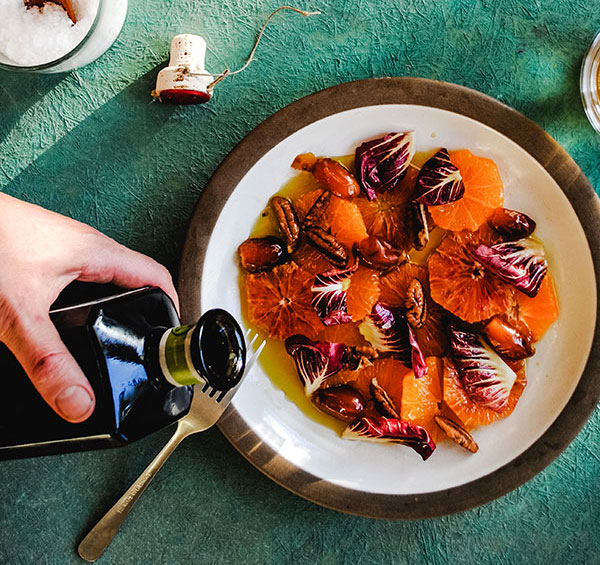
I love watching olive oil as it first streams out of the olive press. Opaque and electric green, it’s charged with the raw power of volatile aromatic compounds. The Italians call unfiltered, newly pressed olive oil olio nuovo, and they know its shelf life in the bottle will be only a couple months.
During the winter olive harvest, olio nuovo is one of the staples of my pantry. I serve it simply in classic dishes like aglio e olio, or I make a sublime garlic bread by saturating freshly toasted levain with glugs of the new olive oil to serve alongside crisp, bright vegetables.
This simple but flavor-dense citrus salad is another way to celebrate this new oil. It’s a study in balance as the flavors and textures of its fresh ingredients come together.
Olio nuovo can vary in flavor, some vibrantly fruity and rich with aromas evoking bananas cooked in butter, some on the greener side, with flavors of artichoke and tomato leaf. For this salad, find an oil with a nice balance of fruitiness, bitterness, and peppery pungency. This plays well with bright, acidic and sweet citrus, but feel free to choose your citrus varieties based on which are tasting best. Dates add a deep caramel sweetness, the Treviso a fresh and lightly bitter bite, and pecans a rich crunch.
Two of the best places in the Bay Area to buy olio nuovo are Market Hall Foods and Bi-Rite Market but also try your farmers’ market: Farmers with small olive groves or some who grow olives on the side often sell their newly pressed oil at this time of year.
Yield: 4 servings
- 3 navel oranges (or other balanced sweet and acidic citrus)
- 3 blood oranges (or other balanced sweet and acidic citrus)
- 10 Barhi dates, pitted and split in half lengthwise
- ½ cup pecan halves, lightly toasted and seasoned with salt
- 2 handfuls of Treviso chicory leaves torn into 1½-inch pieces
- ¼ cup olio nuovo, pungent in flavor
- Finishing salt such as flake salt from Maldon or Jacobson
With a sharp knife, shave off the top and bottom of the citrus so they sit flatly on your cutting board. Now you can pare off the peel and pith in strips from top to bottom, turning the fruit with each slice to progress around the sphere until peels are fully removed and the fruit is revealed. Then slice each fruit horizontally into ¼-inch-thick wheels.
Arrange the citrus on 1 large platter for sharing or 4 smaller individual plates. Place the dates, pecans, and Treviso chicory on top of the citrus. Drizzle the olio nuovo evenly over the salad and sprinkle with the finishing salt.
Now a food columnist for the SF Chronicle and regular recipe contributor to the New York Times, chef and recipe developer Christian Reynoso made his break into recipe publishing in Edible East Bay in 2019 when he was a sous chef at San Francisco’s mainstay restaurant and temple to seasonal California cooking, Zuni Café. Find him at christianreynoso.com
A Guide to Buying Extra Virgin Olive Oil
By Christian Reynoso
With the abundance of fresh, high-quality California-made extra-virgin olive oil on market shelves, it can be an easy choice between locally made oil versus imported. Studies show that up to 69% of imported extra virgin olive oil on the market has been adulterated with other oils or lower-grade olive oils.
But why California?
Our state is gaining on Europe as a coveted origin of extra-virgin olive oils. California shares the ideal Mediterranean growing climate that offers olive oil its rich and dynamic flavor profiles. Currently, California has the world’s highest standards for extra-virgin olive oil, and for domestic consumers, California oils are closer to market, ensuring freshness, and a smaller carbon footprint.
So, the harder choice could be simply which California producer’s bottle on the shelf to take home. Here are a few simple ways to ensure you are making a good choice, even if you don’t have the opportunity to sample.
Look for a Date
You should always find a harvest or bottling date on the package. Even a properly made extra virgin olive oil deteriorates in quality over time, so buy when it’s fresh and use it up within 12 to 18 months of when it was made for best flavor.
Note How It’s Packaged and Stored
One clear way a producer indicates they care about their product is to package it in dark glass or tin. This cuts down on exposure to light, which dramatically shortens the shelf life of extra-virgin olive oil. A good retailer knows not to display the bottles in a window or on a top shelf.
Taste!
If you are at a specialty food market, ask whether they have samples available. Getting to know the taste of good olive oil is the best way to start enjoying it fully.
