
In Season: Kohlrabi & Rhubarb
By Barbara Kobsar | Illustrations by Charmaine Koehler-Lodge
 Want to add some unique vegetables to the weekly meal lineup? Kohlrabi and rhubarb (yes, it’s botanically a vegetable) are at the top of my list.
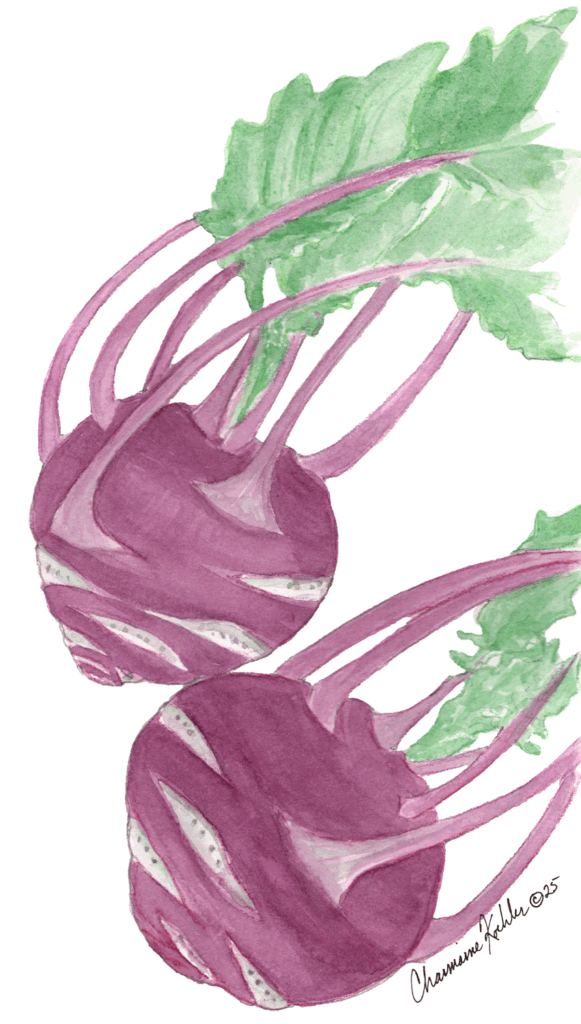
KOHLRABI looks like a root, but it’s not. A native of Northern Europe, this globe-shaped member of the cabbage family offers a delicate, turnip-like flavor. In fact, the name means “cabbage turnip” in German. What we usually see at the market is the enlarged, bulb-like portion of the main stem that forms right above ground. Numerous thinner, leaf-topped stems growing out in all directions give the bulb a space-age look: If you’re of a certain age, you might think of Sputnik.
Pale-green kohlrabi is most prevalent in our markets, but a more colorful purple variety with a similar taste has been popping up. Stems and leaves are often trimmed off before kohlrabi gets to the market, but I’m now finding untrimmed bulbs tied together in bunches like beets.
The taste and crunch of a kohlrabi bulb remind me of a mild broccoli stalk or radish, while the thinner stems and leaves taste more like cabbage. There’s no reason to waste any of it, since stems, leaves, and bulb are all packed with nutrition and good to eat cooked or raw. A 2-to-3-inch bulb size is ideal for tenderness and mild flavor—larger ones develop a fibrous core that should be removed.
Kohlrabi stems and leaves stir fry nicely together with other vegetables. The leaf ribs can be tough, so if you prefer, remove them by folding the leaf in half with the ribs facing outward and pulling off the exposed ribs from the outside.
To prepare the kohlrabi bulb, peel off the skin and the fibrous layer just below. Slice bulb into quarters and, if necessary, cut out any fibrous core. Cut into matchsticks for dipping, grate to use in a slaw, or slice thinly to use in a salad or sandwich. Kohlrabi also makes a tasty addition to mixed roasted vegetables.
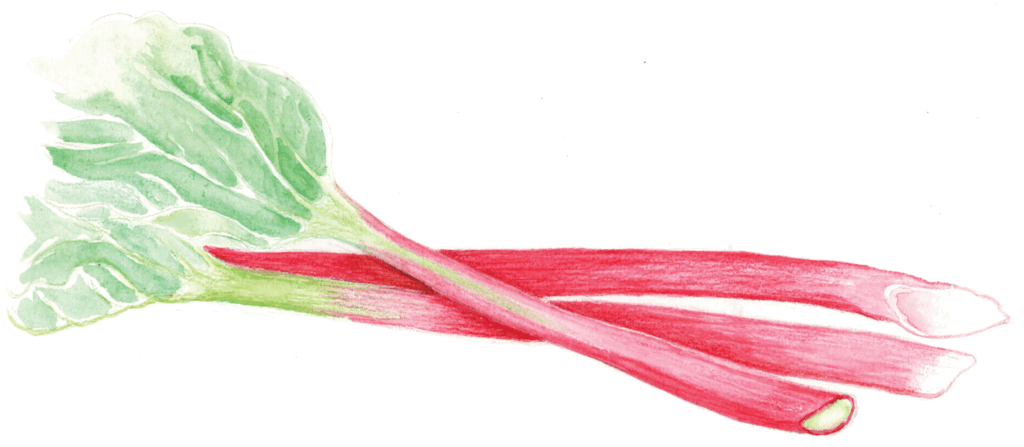
What is RHUBARB? It’s a question I’m often asked at the farmers’ markets. This vegetable looks like red and green–streaked celery, but because of its sour flavor, it is typically used as a fruit. It’s a member of the buckwheat family and is sometimes referred to as pie plant due to its popularity as a pie filling, especially when mixed with strawberry.
A hearty perennial, rhubarb pops up each spring from an underground “crown” to produce very tart fibrous stalks with large heart-shaped leaves, which are inedible. Unlike the tender and sweeter pink stalks of hot house–grown rhubarb found at chain supermarkets, the field rhubarb sold at farmers’ markets may occasionally need peeling and de-stringing (like celery). I generally don’t mind the fibrous peel, which becomes tender when cooked.
When we had an abundance of rhubarb in our home garden, we made all the pies, sauces, jams, chutneys, and desserts we could think of. Then we would cut the washed stalks into 1-inch pieces and freeze them to use later, or we would pick the rest and find a neighbor who could use some.
Freshly picked rhubarb is highly perishable, but it should keep for three or four days if you wrap the stalks in a damp towel and refrigerate. ♦
Kohlrabi Slaw with Rhubarb Vinaigrette
Serves 4
- 2 medium or 3 small kohlrabi bulbs, peeled and julienned
- 1 carrot, peeled and julienned
- 1 apple, cored and julienned
- 3 scallions, finely sliced
- 1 stalk celery, thinly sliced
- Optional: 1 cup thinly sliced red cabbage
- 2 tablespoons chopped fresh parsley, dill, or tarragon
- Rhubarb Vinaigrette (recipe below)
Combine all ingredients except vinaigrette in a large bowl. Pour cooled rhubarb vinaigrette over slaw and toss gently to coat evenly. The slaw is best if chilled for an hour before serving.
Rhubarb Vinaigrette
Makes about ¾ cup
- 1 cup chopped rhubarb stalk (1 large stalk)
- 3 tablespoons water
- 1/3 cup olive oil or avocado oil
- 1 tablespoon sugar
- 2 tablespoons champagne vinegar
- Salt and pepper to taste
Wash and trim the rhubarb stalk. Peeling the stalk is not necessary unless it is very tough. Add rhubarb and water to medium saucepan. Cook over medium heat for about 5 minutes, until the rhubarb is soft and the water has cooked off. Whisk in oil, sugar, vinegar, salt, and pepper. Let cool before adding to the kohlrabi slaw.
Veteran journalist and cookbook author Barbara Kobsar focuses on traditional home-cooked meals using local produce. Find her at the Walnut Creek and San Ramon farmers’ markets selling her Cottage Kitchen jams and jellies.
Artist Charmaine Koehler-Lodge grows most of her family’s food in their large home garden.
