A Matcha Moment
Slow Down at Berkeley’s Forest Tea Bar
By Jordan Novet | Photos by Nora Roth
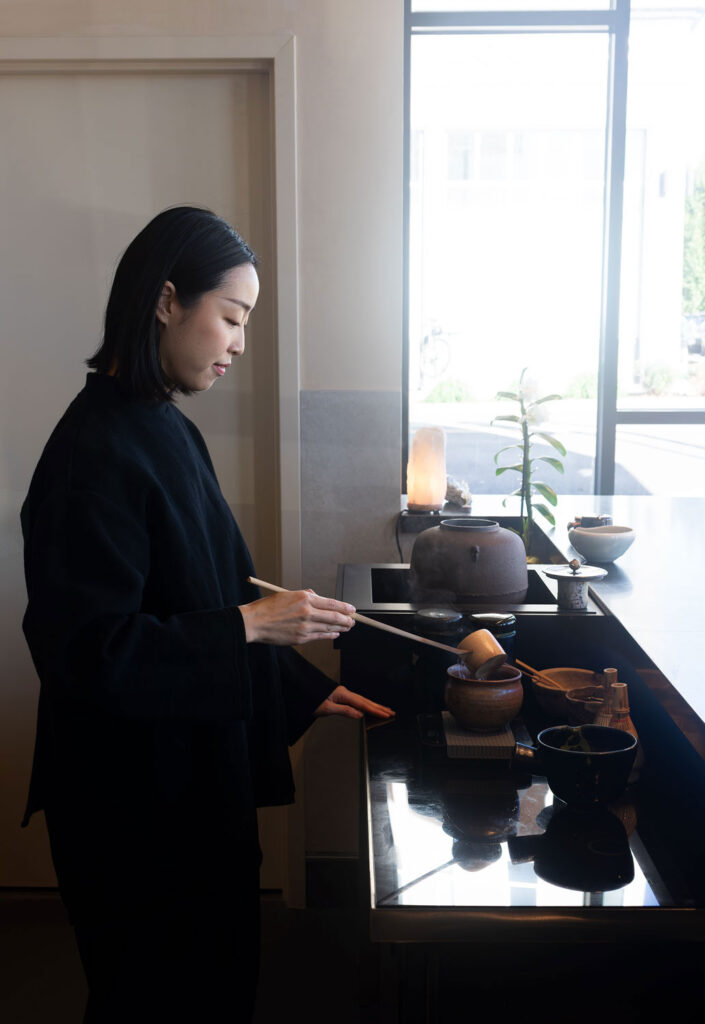
Behind a sleek black counter at 2628 Shattuck Avenue in Berkeley, Eunice Lam scoops up a bright-green powder and sifts it into ceramic bowls. She ladles in hot water from a tall urn and whisks the liquid until tiny bubbles form on the surface, then pours the tea into shallow bowls or into cups of iced milk.
Customers at the counter and around the shop speak in hushed voices, a mood that’s common here at Forest Tea Bar, Eunice says. People tell her the shop seems like a temple, “because it’s so peaceful,” she adds.
Matcha mania is a global phenomenon, but Eunice and her sisters, Elaine and Gigi Lam, got into the business well before the proliferation of bright green matcha-flavored cookies, ice cream, mochi muffins, tiramisu, and crème brûlée. That new popularity has led to a matcha shortage, so Japanese farms that grow the tea have ratcheted up prices. President Trump’s tariffs on imports have ensured that American matcha addicts pay even more, since production of Camellia sinensis for tea in the United States is exceedingly rare.
Gigi Lam, a designer for a Korean technology company, points out elements in the shop that help customers slow down: dark beige paint, light wood furniture, rocks piled in the corners, Japanese ikebana flower arrangements, ambient music playing in the background. The staff, dressed in black, work silently, except when speaking to customers.
The Lam family moved to Oakland from Hong Kong in 2000, and in the mid-2010s, Elaine, a food blogger, became intrigued with matcha after she received some samples. Her taste for the tea evolved, and her sisters and parents became interested as well. In 2017, the whole family went to visit a matcha farm in the Japanese city of Uji, south of Kyoto, where they observed the centuries-old process: covering the tea plants to limit sun exposure, steaming the harvested leaves, and then grinding the leaves in a granite mill.
On their return, the sisters started selling matcha online, and they tested out local interest with a pop-up in Berkeley they called Three Tea Bowls. In July 2025, they opened their shop.
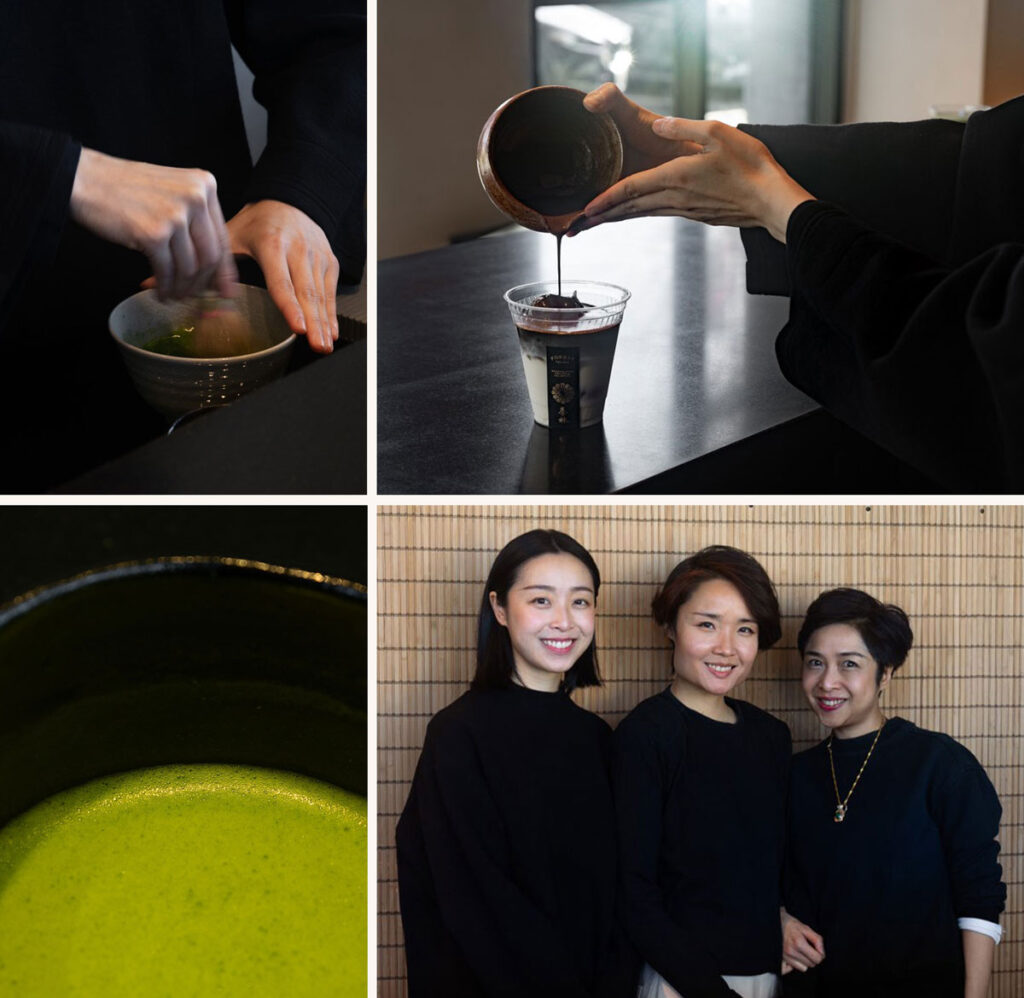
Eunice Lam (top) uses a chasen (bamboo whisk) in a chawan (bowl) to mix green powdered matcha tea leaves with water. She pours the tea into a cup of milk for a matcha latte. Sisters Eunice, Gigi, and Elaine Lam work with a small-scale farmer in Japan to supply their Forest Tea Bar in Berkeley with matcha.
At Forest Tea Bar, matcha is not a flavor enhancer—it’s the whole point. Their bamboo matcha scoops and whisks come from Japanese artisans whose ancestors have made them for centuries. Despite the current worldwide shortage, the sisters don’t worry about running out of matcha for their shop, since they continue to have a special relationship with their small tea farmer in Japan, and they even find they can undercut some online options.
It doesn’t hurt that Americans have become more interested in sophisticated Asian flavors in the past three years, Gigi Lam says. “There’s no sign of it stopping,” she adds.
Jordan Novet is a technology reporter at CNBC who buys most of his fresh produce and bread at the Old Oakland Farmers’ Market. jordannovet.com
Nora Roth is an Oakland-based photographer, artist, and writer. When she’s not looking for the latest addition to her collection of vintage cooking and entertaining books, she’s usually strolling Mountain View Cemetery. noraroth.com