Rufi’s Cacao Brings Oaxacan Tradition to the East Bay
By Jordan Novet | Photo by Nora Roth
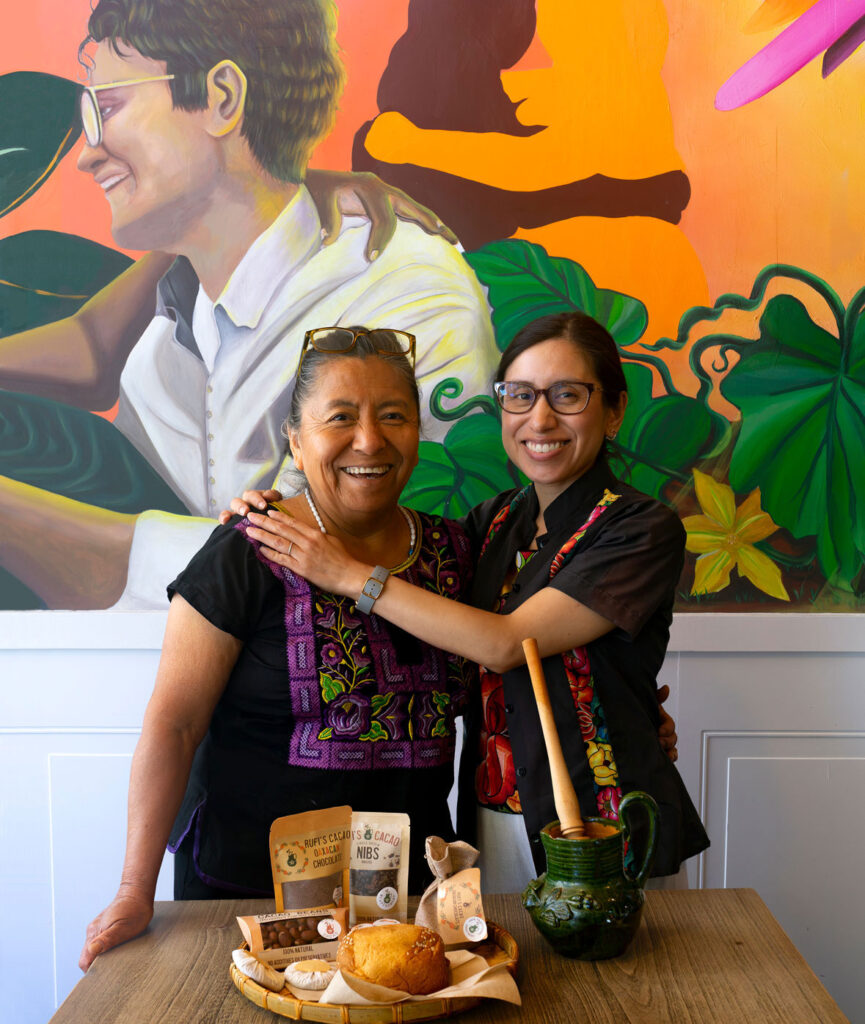
Chocolate was an important part of life for Rufi Sanchez as she was growing up in Oaxaca, Mexico. When people had birthdays, got married, or passed away, Rufi’s family made chocolate.
“I remember my town, my family, my parents, and my friends when I make chocolate, and it smells…Oaxaca. It’s beautiful,” says Rufi while sitting beside her daughter Connie around a dining table at nonprofit Oakland Bloom’s Open Test Kitchen.
Every two or three weeks, Rufi drives from her current home in San Leandro to the Oakland commercial kitchen where she turns raw cacao beans into sweetened chocolate for eating and drinking. She makes products that resemble those she enjoyed as a girl in Oaxaca. When she arrived in Livermore in 1988, there was nothing like it.
Rufi has held various odd jobs around the Bay Area like assembling electronics for Kyocera and prepping at Sizzler. But with three children to raise, she needed more money. Relatives taught her how to prepare Oaxacan-style tamales, and she would rise early to make a large batch and then drive them around to car washes, supermarkets, and eateries in search of Mexicans and other Latin Americans yearning for a taste of home.
Around 15 years ago, she discovered a store in Seaside that stocked pan de yema (Oaxacan yolk bread) and other Oaxacan products that she figured she could sell, too. In 2023, Connie was riding along with her mother when they noticed the store sold roasted cacao. They brought some home. Rufi’s mother, who was visiting at the time, saw the beans and asked if anyone was making chocolate. So they did. The episode was a revelation for Connie. Her husband encouraged her to start a business.
Connie tried out a few cacao suppliers, choosing one that ships from the Mexican states of Chiapas and Tabasco. Rufi was unemployed at the time due to a work injury, so Connie suggested they start a family chocolate business.
Connie found a melangeur (chocolate-refiner) that was a step up from a coffee grinder, and she secured a permit for home food production. In 2023, they sold their wares at a Día de los Muertos event in Livermore under the name Rufi’s Cacao. “[After that,] we would just look for pop-ups where we could go,” Connie says.
In 2025, Connie secured a spot at the Open Test Kitchen. Now, the mother-daughter pair had adequate space to set up a multi-step production process. Rufi began selling their products at farmers’ markets in Berkeley and El Sobrante, and she also began offering demonstrations at local libraries, where she serves drinking chocolate and pan de yema.
Business keeps growing. At first, a 40-pound cacao bag lasted Rufi and Connie two years. Now they burn through 120 pounds in under a year. And the venture makes a profit.
On a morning in August, Rufi and Connie are setting up their stations for roasting, peeling, and refining at the Open Test Kitchen. Rufi’s graying hair is tied back in a bun as she slips a black apron over her embroidered coral-colored shirt and pulls on black rubber gloves. She rinses the thumb-sized cacao beans and hands them over to Connie, who heats some in a wide, parchment-lined pot and the rest on a sheet pan in the oven. Roasting temperature is important, Connie says. If the beans get too hot, they will taste bitter.
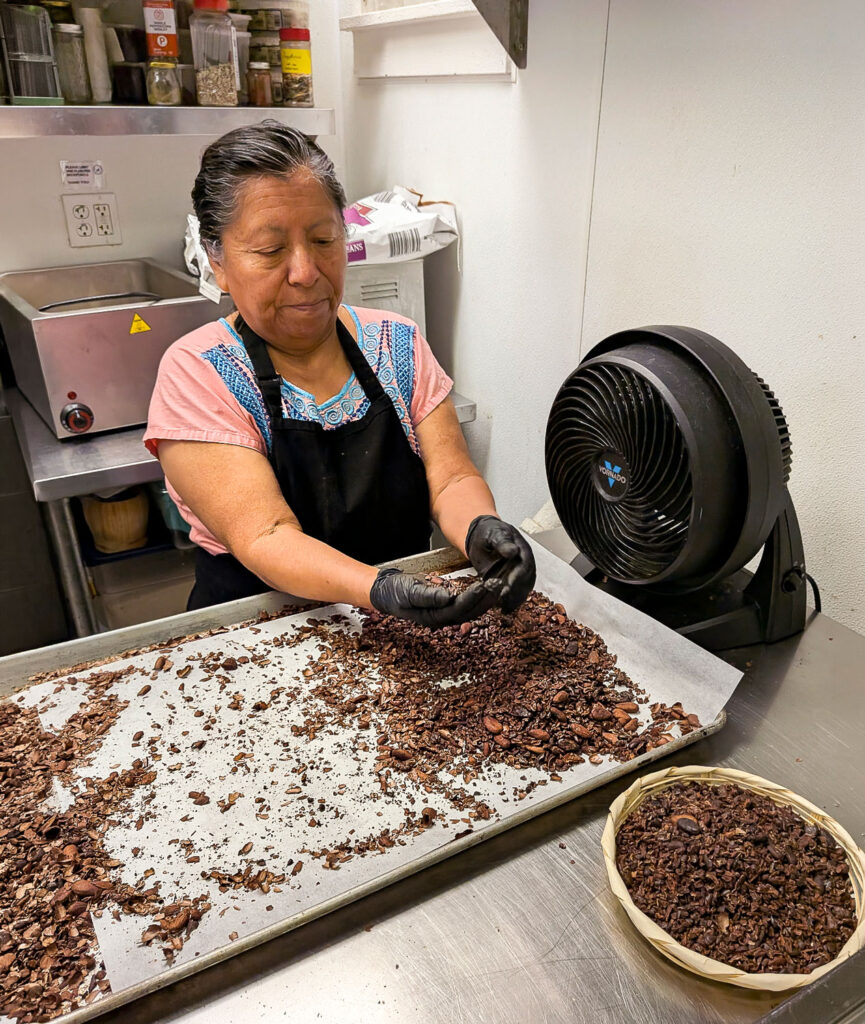
Rufi Sanchez separates cacao beans from their hulls by using a fan to blow the lighter hulls away. (Photo by Jordan Novet)
After 30 minutes, Rufi moves the beans to a sheet pan set beside a fan. She reaches for a rolling pin and moves it gently back and forth over the beans, taking care not to shatter them. She squeezes the beans, tosses them from one hand to the other, and then drops them back on the sheet pan in front of the fan so the air flicks the delicate shells away.
“Hand peeling them takes forever,” says Connie. “We used to do it one by one, and then [Rufi] found this way to make it a little bit faster. It used to take us a whole day just to peel maybe this much,” she says, pointing to the pile of beans in front of her mother.
“It’s not the best way, but I don’t have any other way to clean the cacao,” Rufi adds.
Rufi brings the peeled beans to the melangeur and slides them into the mechanism’s steel bowl, where granite stones spin and slowly grind the cacao into a brown ooze. She uses coffee grinders to mill sugar, almonds, and cinnamon as Connie brings over a step stool so her mother can stand high enough to easily pour these ingredients into the ever-smoother chocolate.
With a spatula, Rufi spreads the cacao paste thinly onto a parchment-lined sheet pan and places the pan in the freezer. Once the paste is cool, she rolls it between her hands and forms puck-like tablets. Later, she will press it into heart-shaped bites in a silicone mold.
Connie says brands like Keith’s Cacao have promoted ceremonial cacao, but that’s “not an actual cultural thing.” Rather than tap into a trend, she and her mother stick to tradition. “I don’t want to do something so different from what our ancestors actually did,” she adds.
The mother and daughter would love to run a café with hot chocolate, mole, and tamales, but for now, they stay busy with the library demonstrations and the farmers’ markets. Rufi can’t help but hand out samples to passersby. “The people love when they see the little heart,” Rufi said. “The heart is love.” ♦
Jordan Novet is a technology reporter at CNBC who buys most of his fresh produce and bread at the Old Oakland Farmers’ Market. jordannovet.com
Nora Roth is an Oakland-based photographer, artist, and writer. When she’s not looking for the latest addition to her collection of vintage cooking and entertaining books, she’s usually strolling Mountain View Cemetery. noraroth.com