Perfecting the Art of ‘Peasant Cooking’ at Top Hatters Kitchen and Bar
By Matthew Green | Photos by Kristen Loken
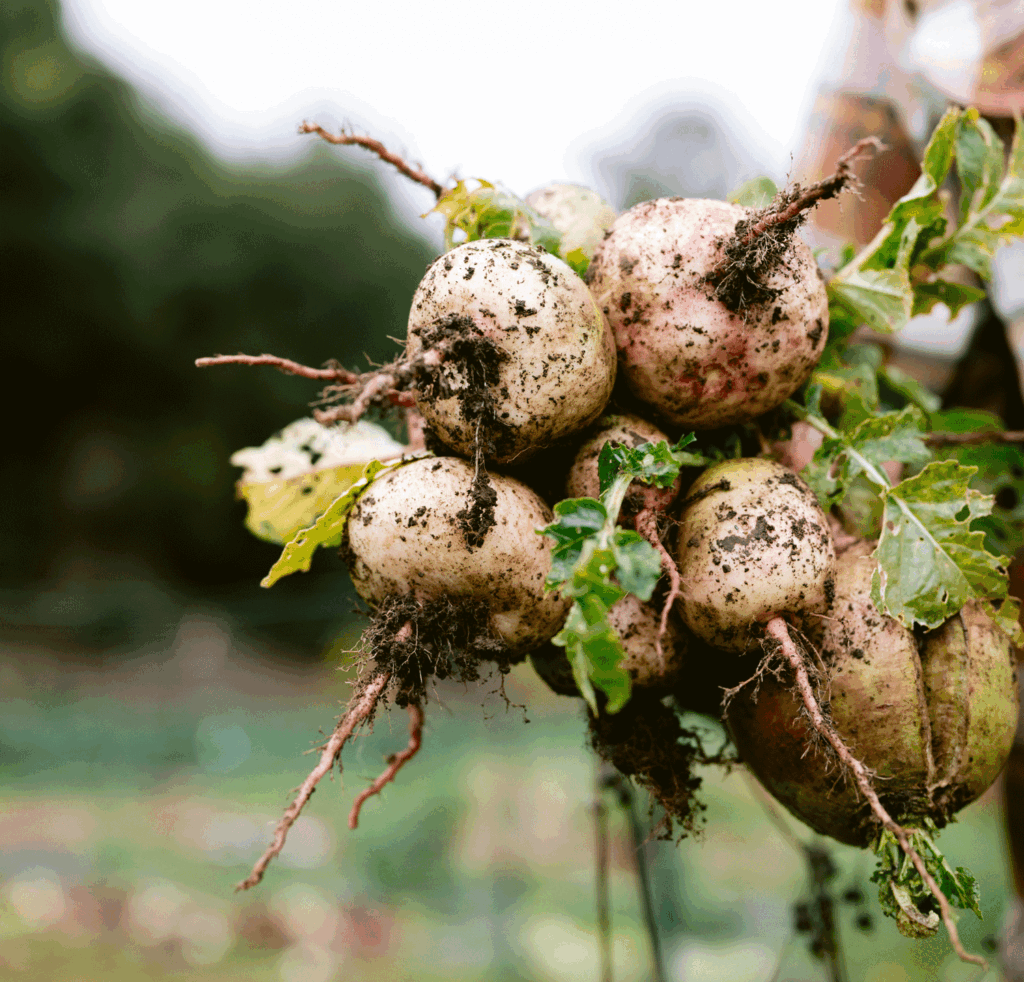
Farmer Scott Terry harvests a Red Meat radish (the split one on the bottom) along with some Purple Heart radishes and hakurei turnips.
WHENEVER DANVY VU STEPS FOOT ON A FARM, she can’t help but construct a menu in her mind.
On a crisp, clear morning in late November, the chef-owner of Top Hatters Kitchen and Bar, a Vietnamese-influenced eatery in San Leandro, crouches in the middle of a row of unseasonably late rhubarb at Stonybrook Canyon Farm.
“This is going on the brunch crepes—the ricotta crepe—and I’m going to roast it and then also make a little sauce to drizzle on top,” Vu says, tearing off the thick stalks and adding them to her growing stash. “There’s not too many fruits here now. So, this will be the fruit. If it’s looking good, then I’m using it.”
It’s “gap season” on this small-but-prolific farm, a strikingly bucolic expanse tucked into the southeast-running canyon that Palomares Road follows out of Castro Valley. She drives here—and to a handful of other nearby farms in Alameda County—at least once a week, loading up her pickup truck with whatever looks promising. Vu says she sources some 90 percent of her produce from these farms alone, judiciously picking the bulk of it herself.
At Stonybrook, the summer’s bounty has already been harvested, the once-thick rows of tomato vines, squash, and fruit trees largely stripped bare. But the five acres of arable land here are still verdant and productive on the cusp of winter, bursting with brassicas and hearty late-season flowers.
In particular, field peas. Used as a nitrogen-rich cover crop, they are growing in abundance now. And that’s what catches Vu’s attention as she scrupulously surveys the rows.
“Right now, we don’t have a lot of greens on our dishes,” says Vu, a small woman with youthful, buoyant energy and a radiant smile, as she efficiently cuts the tender tips. “I don’t know how I’m going to use this until I get back, to be honest. If it’s not going to be in the main dishes, it’s gonna be in some other dish that’s really flexible—like our madras vegetarian curry.”
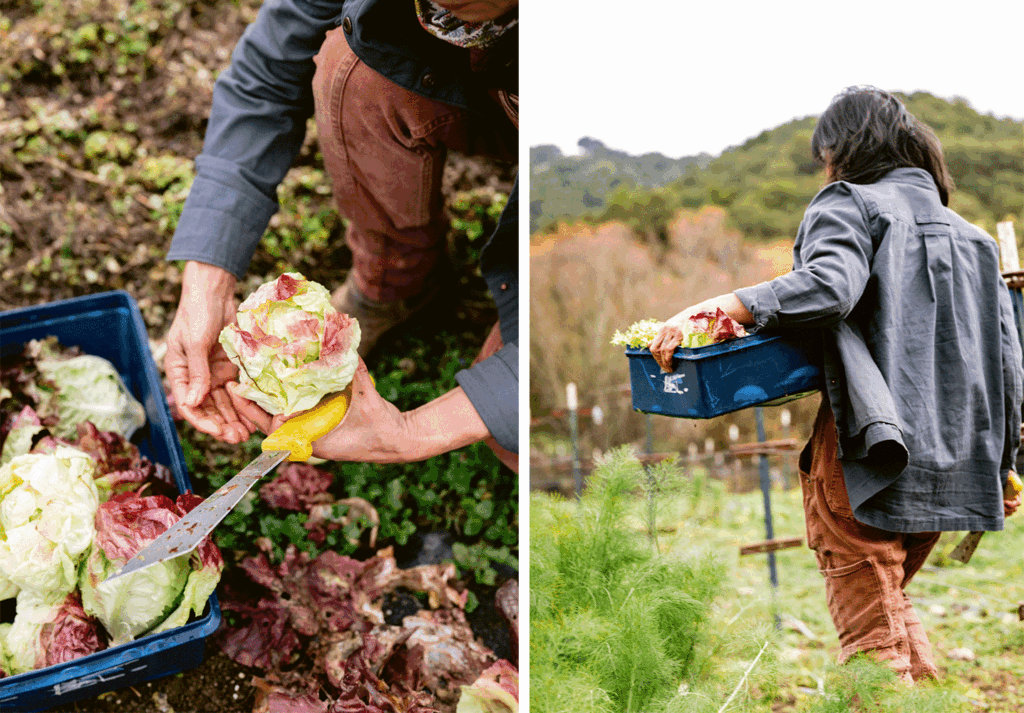
Chef DanVy Vu at Stonybrook Canyon Farm in Palomares Canyon.
Refugee roots
Vu says it’s moments like these, when the selection is relatively sparse, that force her to be the most creative.
“That’s when I’m pushed to use the tree collards that I wouldn’t use. And then I start a little bit more into like, ‘Ok, maybe there’s some edible weeds. What about the fennel fronds?’ Just anything that I can scrape up and it becomes more fun. It’s a great challenge.”
Scavenging is deeply rooted in the tradition of what Vu refers to as “peasant cooking,” an instinct forged by her childhood experience as a Vietnamese refugee.
“You just work with what you have,” she says. “You have to be really inventive, adaptive.”
A self-described “boat kid,” Vu was just five when she and her mother fled their war-ravaged country. After living for a time in a Singaporean refugee camp, the two eventually reunited with Vu’s father and brothers in the Orange County community that came to be known as Little Saigon.
Like many immigrant families, they lived communally; their home served as an informal boarding house for relatives and other immigrants, with meals included.
“My dad taught me how to cook at a really young age,” Vu recalls. “And I really didn’t like it. It was just something I had to do to support the family.”
The family mostly prepared simple, traditional Vietnamese dishes made with whatever ingredients were available and affordable. The banana blossoms in bún bò huế, a beef noodle soup, might be replaced with cheap alternatives like cabbage if that’s what they could get their hands on.
“At that time, we were so poor it was whatever was on the discount shelf,” she says. “So, we cooked with whatever was in front of us. And that’s like the core of my cooking now.”
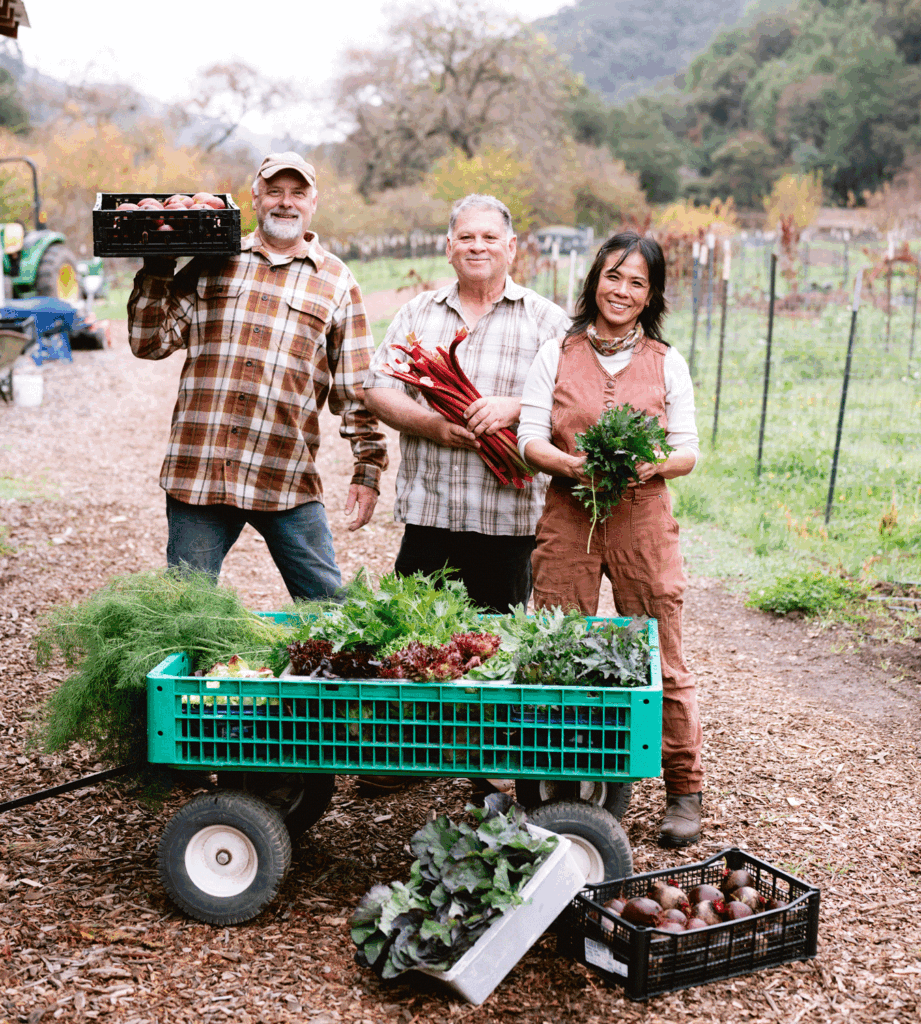
Top Hatters chef DanVy Vu (right) harvested along with farmers Scott Terry (left) and Curtis Kaul on a December morning at Stonybrook Canyon Farm.
A latent passion
Vu’s passion for cooking emerged in college when she moved into a UC Berkeley student co-op and found the pantries stocked with ingredients she had never seen before.
“I remember going into a bin of pine nuts. I’m eating this thing and going, ‘Oh my gosh, this is amazing. What is this stuff?’” she says. “That’s where I really understood and learned more of that farm-to-table cooking.”
Vu had never heard of local culinary luminaries like Alice Waters, let alone the concept of farm-to-table. “All I knew was Vietnamese food. We had never really gone out to restaurants or much less had a fine-dining experience.”
Her sudden exposure to the vast array of available ingredients was revelatory: Beyond just a necessity, she realized, food preparation could be an art form.
Vu made her entrance into the Bay Area food scene on wheels, cooking up Vietnamese-inspired street food out of her Go Streatery food truck. The mobile kitchen gained a devoted following, with creative, eclectic dishes like oxtail and grits and lemon ricotta zeppole, an Italian-style, donut-like pastry inspired by her husband’s Italian background.
“I was never into food trucks, but we just needed some way to get into the scene, and that’s all we could really afford at that time,” Vu recalls. “And man, that’s a hard life. It’s a hustle.”
After vending across San Francisco and Alameda County for years, she used her moderate savings to purchase a rundown storefront and lot, shadowed by the 580 freeway overpass, in a residential San Leandro neighborhood. She and her husband, an electrician, spent several years renovating what had been a hat store, ultimately retaining the previous business’s name as well as its towering pylon sign that had long been a fixture.
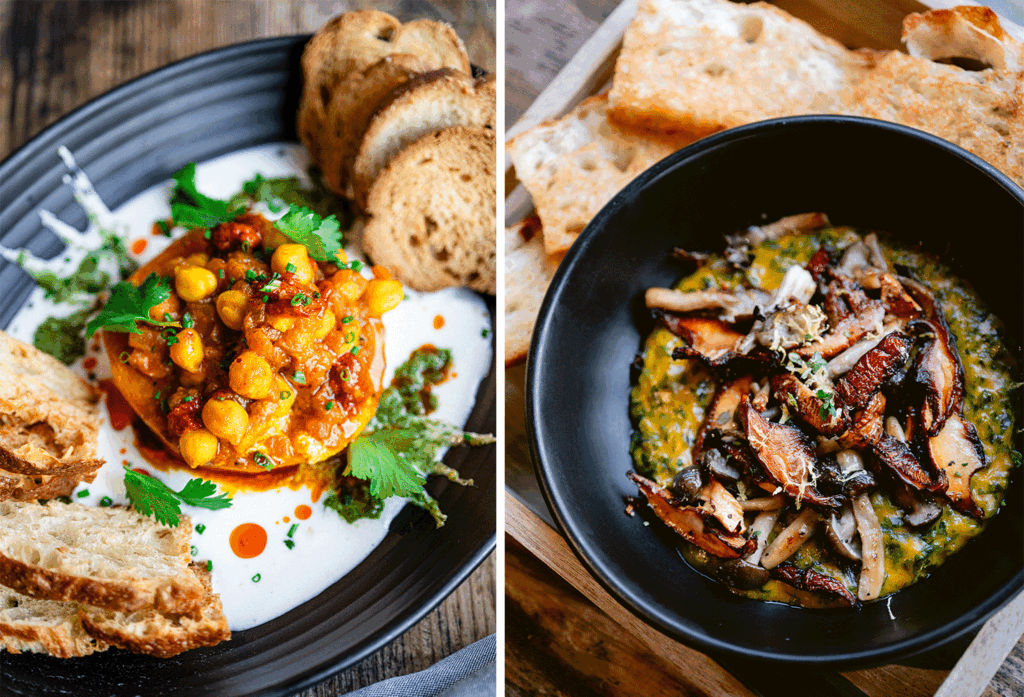
Left: Roasted honeynut squash with spiced chickpeas, garlic yogurt sauce, mint chutney, and smoked Jimmy Nardello pepper salsa served with house crostini. Right: Wild chanterelle and shimeji mushrooms served on creamed tree collards and winter squash with house focaccia
Defying labels
When Top Hatters Kitchen and Bar opened in 2019, it quickly generated buzz well beyond the neighborhood, garnering excellent reviews like the flattering write-up in the San Francisco Chronicle, in which restaurant critic Soleil Ho hailed it as “ambitious and genre-defying,” and “really damn cool.”
Vu still bristles when asked to come up with labels for the style of food she serves. “It’s really hard to categorize,” she says. “Every interview I dread that. I feel like I have an identity crisis.”
She says she has a Vietnamese pantry, with all the standard ingredients, spices, and seasonings. Fish sauce features prominently in her cooking, and there are several classics on the menu, like the pork banh mi sandwich and a rice vermicelli bowl.
But most of the dishes incorporate whatever additional ingredients come through the door, traditional or otherwise, rendering a product that defies easy classification.
“They’re not even Vietnamese dishes,” she insists. “They’re just whatever comes from the farm and what I come up with.”
The restaurant’s popular lion’s mane mushroom and kabocha fritters, for instance, are served with a chutney made from rau ram, the fragrant, peppery herb featured prominently in Vietnamese cooking.
She often returns to the word peasant in describing her menu: rustic, unpretentious, unfussy. No foams or fizzes. Just creative compilations based on what’s available.
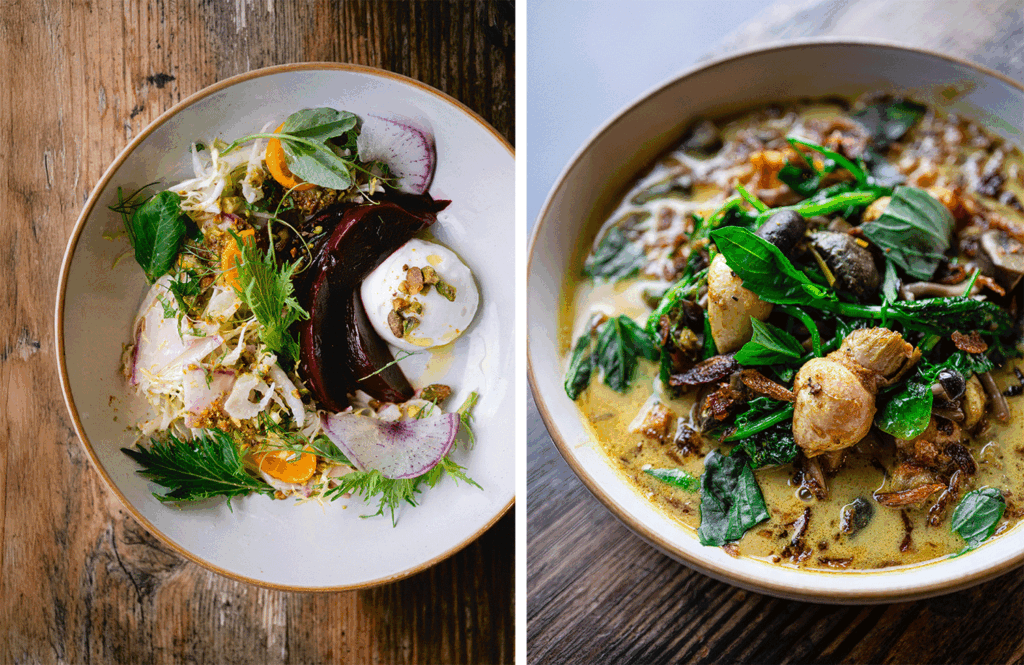
Left: A winter salad of marinated beets with olive oil, whipped ricotta, shaved radish, fennel, and pistachios dressed in preserved citrus dressing
Right: A Madras curry with mushrooms, winter squash, turnips, and pea shoots
Farm-to-table collaborations
Vu initially relied on large distributors, flipping through catalogs of thousands of items.
“I think there was a turning point where I was just like, this is not very creative, this feels so weird,” she says. “That’s not how I cook at home. It didn’t feel right.”
So, she started cold-calling farms located within a short drive of her restaurant. Few responded. Without major name recognition or pedigree, she says, most farmers didn’t know what to make of her.
“You say you’re calling from Top Hatters Kitchen and Bar, and they think you’re a motorcycle club,” she says.
That changed after the restaurant received Michelin Bib Gourmand recognition in 2021, an award it’s been granted every year since.
Suddenly, calls were returned and relationships formed. Vu now sources nearly all of her produce from Stonybrook and a few other nearby growers, including Brown Girl Farms, Pollinate Farm, Thumbelena Greenthumb, and Chetwyn Farm.
She says working directly with farmers is as much about collaboration as it is sourcing.
“When I work with a farm, I don’t ask them, ‘Can you grow me this, can you grow me that?’” she says. “It’s more like, ‘What do you guys have? Ok, I will work with that.’”
She understands why most chefs don’t do that: It takes a lot of time and energy. But it also leads to unique culinary opportunities and discoveries, like when she rescued pounds of bolted little gem lettuces that were destined for the compost pile.
“It ended up being the best salad,” she remembers. “Bitter is a flavor profile.”
The Farm in the Canyon
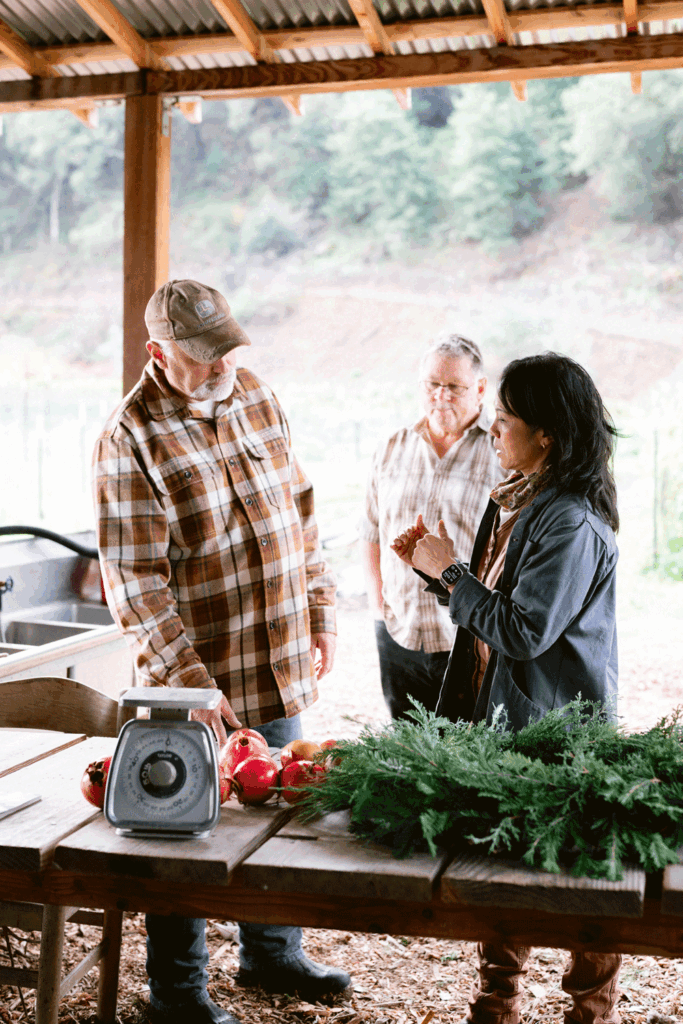 Scott Terry, co-owner of Stonybrook Canyon Farm, was among the first growers to respond to Vu’s solicitations.
“When Scott called me back, I was just like, ‘I’ll do anything, I’ll come and pick it up, I’ll pick it for you.’ And that started a really neat collaboration.”
Nestled into Palomares Canyon, bordering unincorporated county land, the certified organic farm is easy to miss without the right geographic coordinates. Out here, cell service abruptly vanishes.
“I used to get anxious coming out to the farm with no reception,” Vu says. “I’d imagine the restaurant was burning down. Now I love it.”
On crossing a rickety wooden bridge over the creek, one enters a landscape that feels improbably rural, more Mendocino than East Bay. Yet on a clear day, from the ridge at the top of the property, the Salesforce Tower and San Mateo Bridge are visible reminders of its proximity to the Bay Area’s urban core.
Only five of Terry’s 155 acres are actively farmed. The land is a rare pocket of preserved agriculture in a region facing unyielding growth and development pressure.
“We want this property to always be ag,” says Terry, a gregarious middle-aged man with a grey goatee and sun-weathered complexion. He’s a commanding presence as he leads a tour of his farm. “I mean, to have this kind of property in the middle of the Bay Area. It’s partly what drives us to think this is so special.”
Terry and husband Curtis Kaul purchased a nearby plot, where they currently live, more than a decade ago. They bought the farm property in 2019. Both parcels have long been used for agriculture, to varying degrees of success, Terry says.
Royal Ann cherry trees were planted here about 100 years ago, most of which were torn out in the 1970s when the crop was no longer deemed commercially viable. Terry points to the lone survivor, now surrounded in the orchard by an impressive selection of rare stone fruits, mulberries, and antique apple varieties, including Ashmead’s Kernel, Hudson’s Golden Gem, and Arkansas Black.
“It was developed at a time when storage apples were needed for winter use, which people don’t think about today,” he says of the Arkansas Black, an apple with a strikingly dark-red color that Terry describes as having the texture and taste of “a block of wood” when first picked.
“If put in cold storage for a couple of months, it turns sweet and aromatic,” he says longingly. “We have some in our fridge now and will use them for pie at Christmas.”
Since its inception, Stonybrook has largely catered to about nine high-end Bay Area restaurants, Top Hatters among them. Others include Quince in San Francisco, Chez Panisse and Sfizio in Berkeley, and Esin in Danville.
“They’re not Denny’s,” Terry says. “They’re all restaurants that are really particular about quality, and their menus change all the time. That’s sort of the key: to have someone who intends to change their menu instead of just doing the same thing over and over again, because we don’t do the same thing.”
But Vu, he notes, has been among the most consistent clients.
“Top Hatters buys everything they possibly can from us throughout the entire year, so they really keep us in business.”
Terry says he set out to grow a broad diversity of crops that chefs couldn’t find anywhere else, produce with distinctive flavor and character. A point of pride is the impressive selection they offer at their Saturday morning farm stand, which opens for about six weeks from late July or the first week in August through September when the harvests thin out.
Some chefs gravitate to the farm’s mulberries, Terry says. Others seek out its orange butternut squash, a sweeter and creamier variety that looks nothing like the pale Waltham variety common in grocery stores. “Chefs can’t get it anywhere else,” Terry adds.
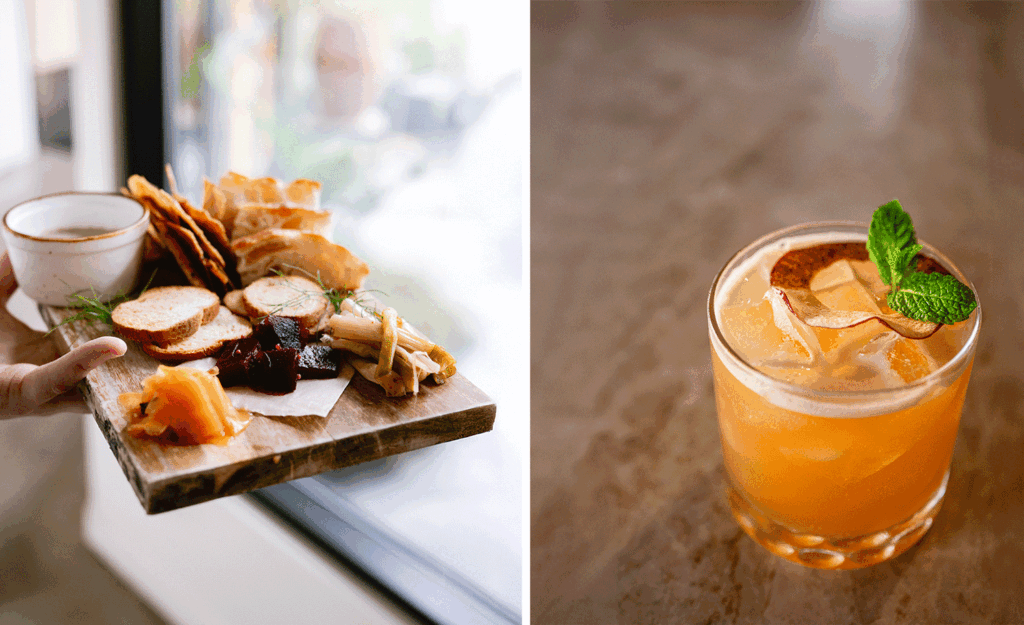
Left: Don’t pass up Top Hatters’ vegan truffled mushroom and hemp seed pâté. It’s served with house-made crackers and breads and a selection of seasonal pickles like those here made from Stonybrook Canyon Farm beets and butternut squash. Right: A fall rye cocktail with house-made apple and fenugreek syrup, bitters, and lemon, garnished with a slice of dried apple and fresh mint
Pea Shoots in a Mocktail
Back at the restaurant, Vu serves a surprisingly tasty, slightly sweet blended green mocktail made with the pea shoots she harvested just hours earlier. It’s lunchtime, and a steady stream of customers file into the light-filled, wood-accented dining room, an intimate, casually elegant space separated from the street by a large outdoor patio.
Vu remains in constant motion, bouncing between the small open kitchen and the chic, marbled bar, where a bartender mixes intricate cocktails against an attractive dark-blue tile backdrop. Vu has somehow found time to unload her truck and clean up nicely from the morning harvest, leaving little evidence of having been on her hands and knees in the dirt just an hour earlier.
On the menu are dishes with plenty of ingredients identifiably from Stonybrook and the other growers and foragers Vu sources from. Among them is a popular seasonal item that Vu feels particularly proud of: a sweet, spicy concoction of roasted winter squash and tree collards creamed together, topped with fried chanterelles, and served with freshly baked focaccia. The dish, she says, was born from the limited options available from her small coterie of providers.
“It just kind of comes together in my head while I’m at the farm. And then I go back and create it and it works,” she says.
“I get this giddy feeling when people ask, ‘How did you come up with this?’ And I’m just like, ‘It was during a moment when someone said this is all I have for you.’” ♦
Top Hatters is located at 855 MacArthur Boulevard in San Leandro. tophatterskitchen.com
Mark your calendar for an August visit to the Stonybrook Canyon farm stand, located at the 2.4-mile marker on Palomares Road. “The farm stand location has plenty of parking and no bridge,” Terry says. “We are the only farm stand on Palomares, so we are kind of hard to miss, but it is amazing how many people ignore our directions, or don’t know what mile markers are, and use their phones to find us, which will send them to the wrong place.” facebook.com/StonybrookCanyonFarm
Matthew Green is Berkeley-based writer who was previously a reporter and editor at KQED News. His work has appeared in a range of local publications, including the San Francisco Chronicle, East Bay Express, and Edible East Bay. When not chasing food stories, he can usually be found chasing after his two young daughters.
Kristen Loken is a Bay Area native photographer and author whose food-centered imagery explores people, place, and connection, collaborating with culinary creatives and global brands to tell stories rooted in warmth and meaning. kristenloken.com