In Season: Chicories & Purslane
By Barbara Kobsar | Illustrations by Charmaine Koehler-Lodge
 I’ve always loved spotting the cornflower-blue blossoms of wild chicory among the wildflowers along the roadside. The plant’s tooth-shaped leaves and flower’s radiating disk of petals make chicory resemble the dandelion, and indeed, both plants are in the Asteraceae family along with lettuce and artichoke.
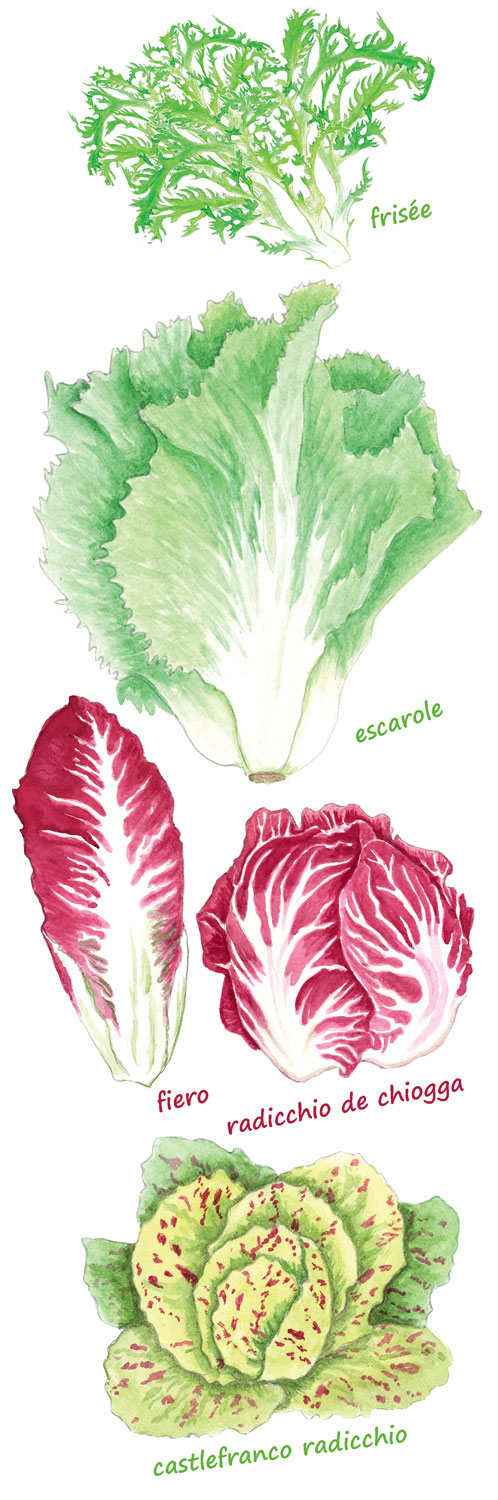
Cultivated chicories—like curly endive, frisée, escarole, and radicchio—bring exciting colors and textures to our tables along with a distinctively bitter taste.
Curly endive is a large plant with frilly, pale-green leaves. Frisée is a diminutive version of curly endive.
Escarole, a broad-leaved chicory, often has its outer leaves tied together in advance of harvest to keep light from penetrating. The resulting blanching keeps the inner leaves tender and improves their flavor.
Radicchio, a glossy red, round-headed chicory with white veins, is sometime mistaken for purple cabbage. Among the many radicchios I watch for at the market are the football-shaped Rosso di Verona and green, tulip-shaped Variegato di Castelfranco with its thin, crave-worthy crisp leaves.
The history of chicory as a culinary specialty takes some unexpected twists. During the U.S. Civil War, when Union blockades cut off vital coffee imports to the Port of New Orleans, clever purveyors took up a French and Belgian custom of extending coffee with roasted dried chicory root. The toasty aroma of chicory-laced coffee still greets New Orleans visitors.
Another surprise comes in the early 19th century when some Belgian farmers found that chicory roots stored in the cellar sometimes sprout “buds” or “chicons” of pale leaves with a sweet flavor. They called it witloof (which means white leaf), and the new vegetable became quite popular. Here in the U.S., we know it as Belgian endive. In 1978, a young Californian named Rich Collins became captivated with witloof and started his own Belgian endive operation in Rio Vista. Now renamed California Endive Farms, it remains the largest U.S. producer of Belgian endive to this day. The process starts outdoors in the field as Collins grows chicory plants for several months then cuts off the leafy tops as he harvests the parsnip-like roots. He puts these into cold storage until he’s ready to force them to sprout (yes, the same way we force hyacinths or amaryllis to bloom indoors earlier than they would naturally out in the garden). The complex process explains the rather high price. (Collins also produces a red California endive.)
Chicories are always good in salads, and the pretty red leaves of radicchio always work nicely as cups for serving crudités, olives, or potato salad. They’re equally delicious cooked and served or over rice or pasta, added to soups, or sautéed in stir-fries. When summer calls me to the barbecue, I’ll grill radicchio to add a little flare to the plate. I cut the heads into wedges (keeping the core intact), brush with olive oil, and then cook over medium heat for a few minutes per side. As the leaves wilt, char, and caramelize, they acquire a sweet note that balances the bitterness.
 When you bring chicories home from the market, wrap them in damp kitchen towels and store in the refrigerator until you’re ready to use them. They should keep like that for up to a week.
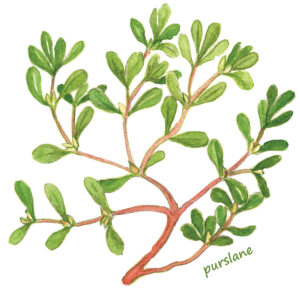
Another plant I’ve long adored is portulaca. It’s not edible, but as a child, I was drawn to its small, rose-like orange and red flowers. I eventually met its edible relative: purslane, a plant that grows wild in many parts of the world. It’s often considered a weed by gardeners, but the flat, succulent green leaves offer a tangy flavor, and the tender young stems add a nice crunch to sandwiches and wraps. In the wild, purslane has a toxic look-alike (spurge), so unless you know how to distinguish the two, it’s best to buy purslane at the market or grow it from seed. Purslane is very perishable and should be used as soon as possible after purchase. ♦
Choose Your Chicories Salad
Mix your chicories in this savory salad for a variety of flavors, textures, and colors.
Serves 4
For the dressing
- 1/3 cup extra virgin olive oil (or combination of olive and avocado oils)
- 3 tablespoons white wine or champagne vinegar
- 1 teaspoon whole-grain mustard
- Salt and pepper to taste
For the greens
- 3–4 cups endive, radicchio, frisée, or escarole, cleaned and dried
- 1 cup purslane (optional), washed, dried, tough stems removed
- For the toppings
- ½ pound shiitake or cremini mushrooms, cut into thick slices
- 1 tablespoon olive oil
- 2 tablespoons chopped chives
- ½ cup crumbled goat cheese
To make the dressing: Place all ingredients in a small bowl and whisk together.
To prepare the greens: Tear lettuces and purslane into pieces and place in a medium-sized bowl. Add half the dressing and toss until greens are coated.
To make the mushroom topping: If using shiitakes, remove stems. Slice mushrooms and sauté in 1 tablespoon olive oil for about 5 minutes or until tender.
To assemble the salad: Arrange greens on 4 individual salad plates. Spoon the mushroom topping over the greens. Top with chives and cheese. Drizzle with additional dressing as desired.
Veteran journalist and cookbook author Barbara Kobsar focuses on traditional home-cooked meals using local produce. Find her at the Walnut Creek and San Ramon farmers’ markets selling her Cottage Kitchen jams and jellies.
Artist Charmaine Koehler-Lodge grows most of her family’s produce ad flowers in their large home garden.