The Molinero’s Dream
Bolita Masa Opens a Café
By Jordan Novet | Photos by Nora Roth
Emmanuel Galvan melts disks of dark chocolate in a double boiler and stirs some into a glass of coconut milk for a ganache he’s testing for mocha and hot chocolate. It’s February 2026, and he’s deep into his work at his commercial kitchen in Berkeley while musing on what led him to this moment.
Born to Mexican parents living in Napa Valley, Galvan was a child who watched the Food Network and wanted to be in the kitchen. He says he used to stir up masa by mixing warm water with store-bought corn flour, but it wasn’t quite like the masa he tasted later in Mexico.
Galvan learned that archaeological evidence of maíz (corn) in Mexico goes back thousands of years, and as his fascination with that long history grew, he discovered that many Mexican towns used to have their own mills, where molineros (millers) would grind the nixtamalized (alkaline-soaked) maíz that people growing their own corn would bring in.
“Why can’t we have that here?” Galvan asks. It’s a rhetorical question, since, even as the village molinos in Mexico have become increasingly rare, Galvan has transplanted a bit of that rural village aesthetic to the Bay Area with his own mill in Berkeley, where he’s devoted to making freshly ground masa from heirloom maíz. “That’s kind of why this is really romantic in some ways, right?” His masa business, Bolita Masa, now almost six years old, is thriving on ample business from consumers and restaurants, and he’s just expanded to include a café.
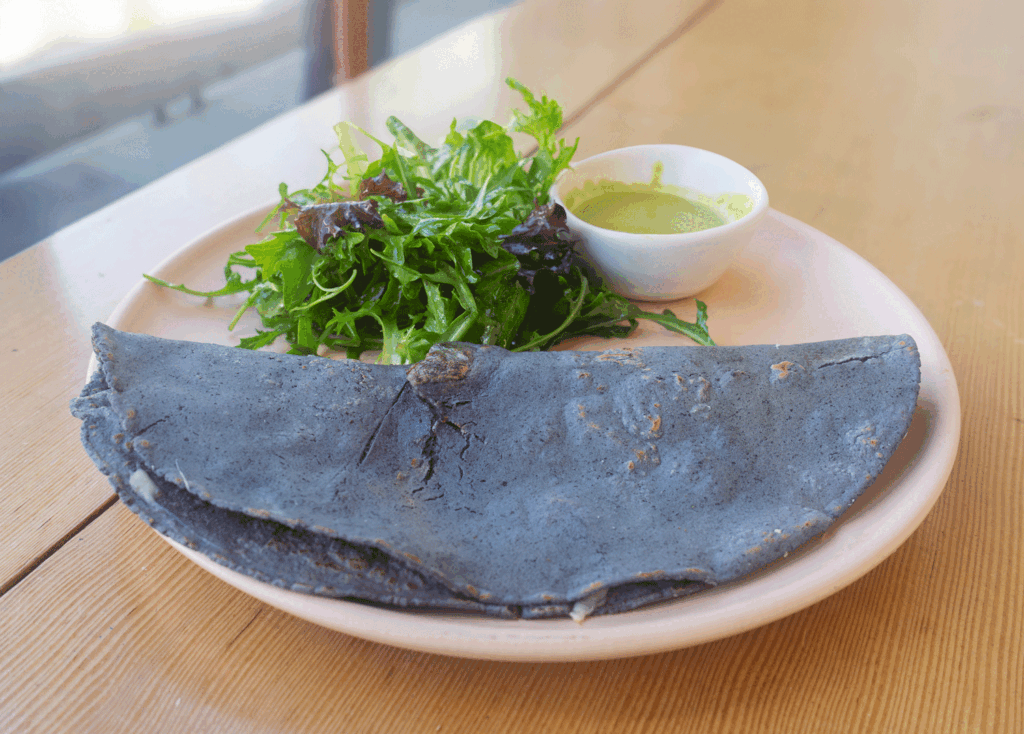
Café Bolita’s Chile Verde Quesadilla.
“The whole intention of Bolita is, ‘How can we make masa more accessible?’” he says.
On launching Bolita Masa back in 2020, Galvan chose a name with dual resonance: The Spanish word bolita means “ball of masa dough,” and it also references Bolita Belatove, a type of red heirloom maíz from the Mexican state of Oaxaca. Galvan started buying his maíz from a Mexican wholesaler, Tamoa, which stocks two dozen landrace varieties from Mexican farmers. At first, he milled the corn at home in a hand-cranked grinder. When he realized he needed a more sophisticated mill, he found space in a shared commercial kitchen in Oakland.
Landrace crops are traditional, locally adapted plant varieties that have evolved over centuries in specific geographic locations, untouched by modern industrial breeding. These crops are genetically diverse, highly resilient to local climates, pests, and diseases, and possess unique, stable characteristics. They are considered the ancestors of modern commercial cultivars. —Wikipedia
Galvan has extensive experience in Bay Area restaurants: He’s cooked at the likes of Bar Tartine, Tacos Oscar, Pizzeria Delfina, and La Folie. To share his products, he started popping up with his own masa-based dishes at First Friday block parties in Berkeley’s Gilman District, and he started teaching others how to make masa at Oakland cooking shop Preserved.
As his fan base of masa-heads emerged and enthusiasm grew, Galvan realized he needed to increase capacity. He obtained a more robust freestanding molino but found that the Oakland space couldn’t supply enough electricity. His search for a more appropriate home for Bolita Masa landed him at the Berkeley Kitchens, an old West Berkeley industrial space that now houses small- to medium-scale food businesses and artists. Galvan’s kitchen was steps away from Standard Fare, the beloved Berkeley café that chef/owner Kelsie Kerr opened in 2014 and closed at the end of 2025 when she decided to retire. Kerr offered her space to Galvan, who had dreamed of running a community-focused molino and café.
Days after Kerr declared the end of Standard Fare, Galvan announced the launch of Café Bolita. He revamped the space and planted cacti outside. He hired people to help with cooking, serving, and dishwashing, and he refined recipes together with kitchen and production lead J Embry. The group hatched plans to complement staples such as quesadillas with yogurt, a frittata, and coffee drinks to satisfy the neighborhood breakfast and lunch crowd.
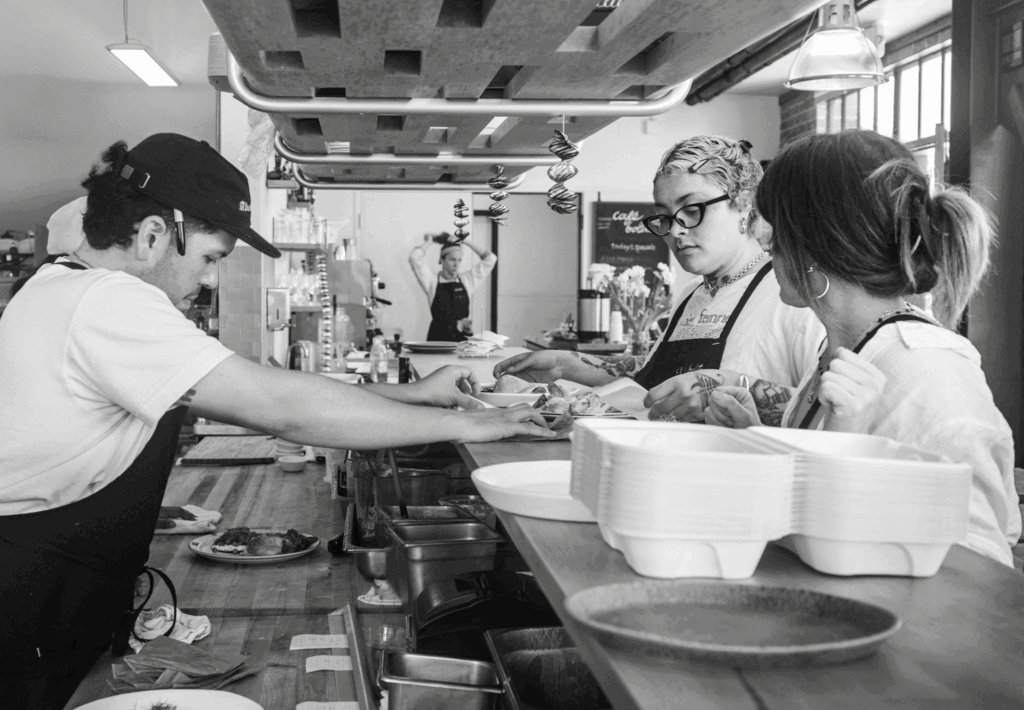
When Café Bolita opened on March 26, owner Emmanuel Galvan (left) found himself working the line and even washing dishes to keep up with the crush.
Café Bolita held a soft opening over several weeks in February and March. Many items on the abbreviated menu sold out on most days they were open. Galvan warned on Instagram about potentially long wait times, and sometimes he had to step in to wash dishes. He said he wasn’t sure how they could make enough masa to serve everyone coming to the café, and he wondered if the staff should pull back on their wholesale and retail business. He doesn’t want to see his team members burn out, and making masa takes time. That responsibility falls on J Embry.
It’s March 26, the day before the grand opening, and Embry is in the kitchen preparing the maíz, which will nixtamalize overnight in vats with calcium hydroxide and water. The next morning, Embry rinses away the alkaline slurry and pericarp (seed coating), carts the corn over to the molino, and installs two heavy volcanic stones inside the steel-plated machine. “Once I start grinding masa,” they say, “I can’t do anything else. It requires all my attention.”
Domestication of maíz (corn) can be dated back 9,000 years in Southern Mexico, and for nearly half of that time, culinary preparation has included nixtamalization, a process that involves soaking the grain in an alkaline solution to improve its flavor, texture, and nutritional value.
Embry pours grains into the molino’s hopper and allows a trickle of water to enter through a hose. As the mill starts to turn, the corn makes loud popping sounds as it travels between the stones. Shreds of blue corn masa start dropping into a catchment tub as Embry keeps adding kernels, pushing them down the hopper with a spatula. If the molino runs with no maíz to grind, a fire can start, Embry says. “It’s gotten really close to happening.”
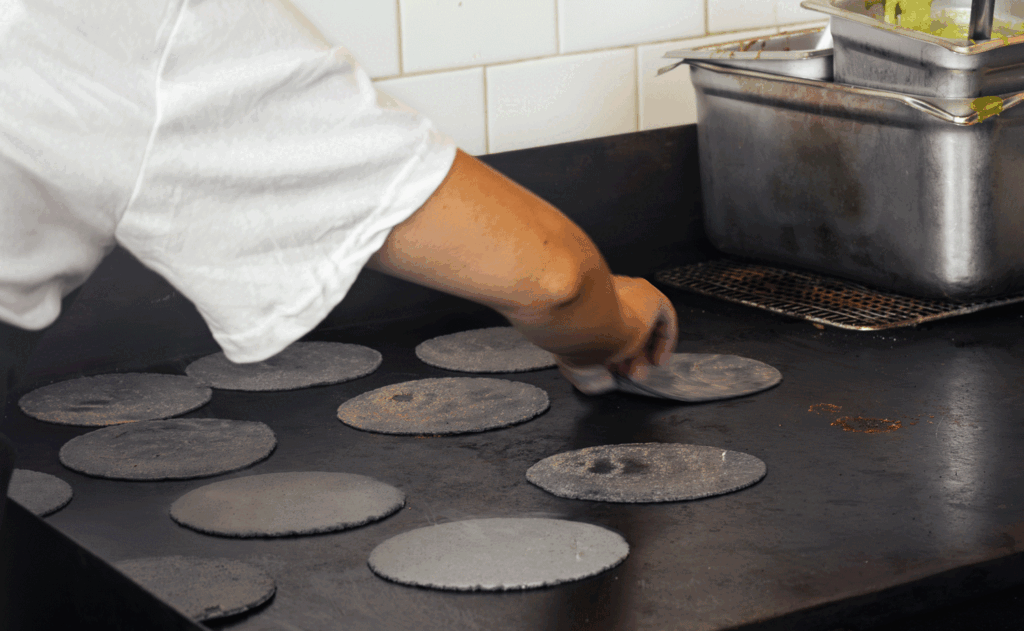
Milling also heats up the corn, and when blue corn masa sits too long in its accumulated milling heat, it will turn green, so Embry quickly moves the pliable masa into a mixer and adds salt as the mixer spins. They grab a chunk of the blue masa, roll it into a ball, and toss it onto a tortilla press and pull up the handle. They spread oil on a hot cast-iron skillet, then put on a tortilla and flip it a few times. It puffs up. Light brown spots appear. They take a bite. They are satisfied. The grand opening can proceed.
Up front at the restaurant, some customers order the tostada. It’s a round of dark-blue masa as thin and wide as a compact disc, as crunchy as a corn chip. On top rests a layer of Meyer lemon ricotta below a pile of chopped asparagus and peas. A little gem lettuce and fennel salad sits beside the tostada.
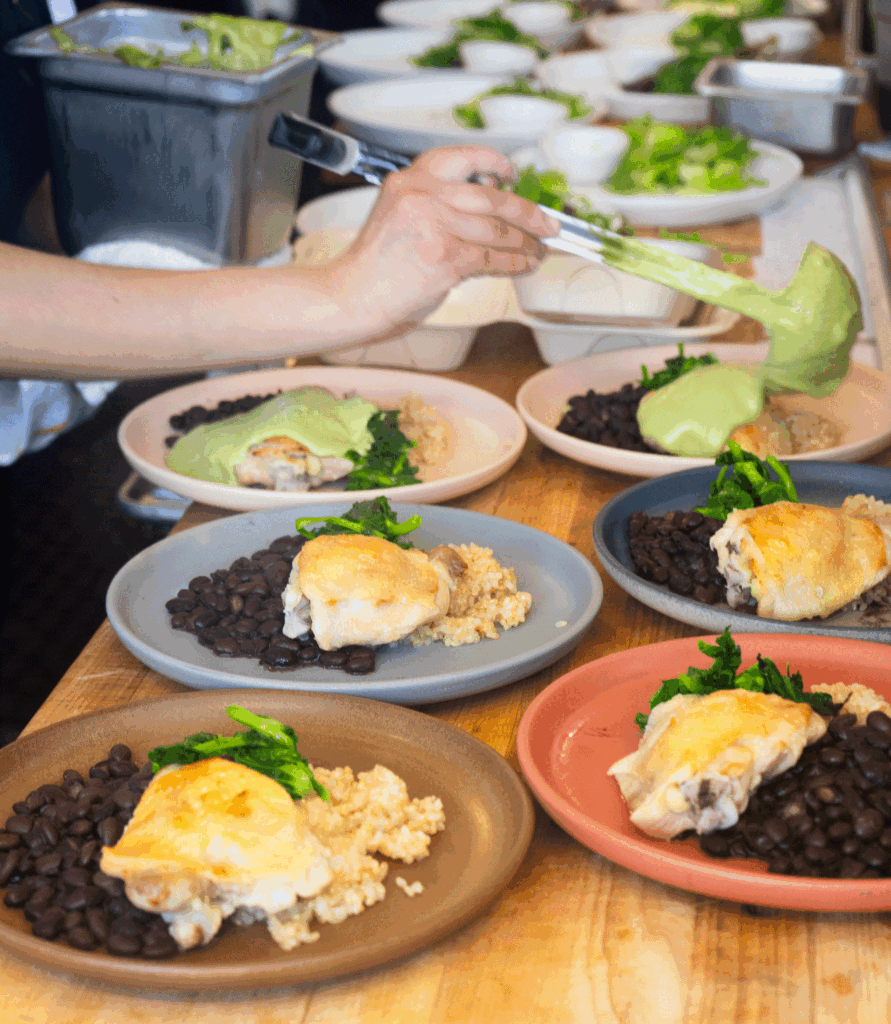
Chicken en Mole Verde with black beans, brown rice, and seasonal vegetables.
The following day, a Saturday, is busier. Many guests opt for the Chicken en Mole Verde. The dish features a chicken thigh smothered in thick light-green sauce alongside Rancho Gordo black beans, brown rice, and gently cooked greens. A server brings a pair of steaming blue tortillas for assembling the components into tacos and for sopping up the mole. At a griddle in the kitchen, Galvan and his teammates take turns tending to rows of tortillas.
At the stove, a chef steams tamales filled with carrot, spinach, and chard. For the tamales, Embry makes masa with a yellow maíz, rinses the kernels thoroughly, and dials in a coarser grind.
Two days later, Galvan reflects over the phone that with the crush of people coming in, the grand opening wasn’t easy. He would like to make the operation more sustainable for employees. Café Bolita could charge much higher prices, but he’s not looking to make it a fine-dining establishment. He believes the restaurant should be affordable.
“But it’s been going well,” he says. “I think folks seem very happy.” ♦
Café Bolita: 2701 Eighth Street #118, Berkeley | cafebolita.com
Bolita Masa: bolitamasa.com
Jordan Novet is a technology reporter at CNBC who buys most of his fresh produce and bread at the Old Oakland Farmers’ Market. jordannovet.com
Nora Roth is an Oakland-based photographer, artist, and writer. When she’s not looking for the latest addition to her collection of vintage cooking and entertaining books, she’s usually strolling Mountain View Cemetery. noraroth.com
Chochoyotes and Halibut in Poblano Broth
Recipe and Photo by Emmanuel Galvan of Café Bolita
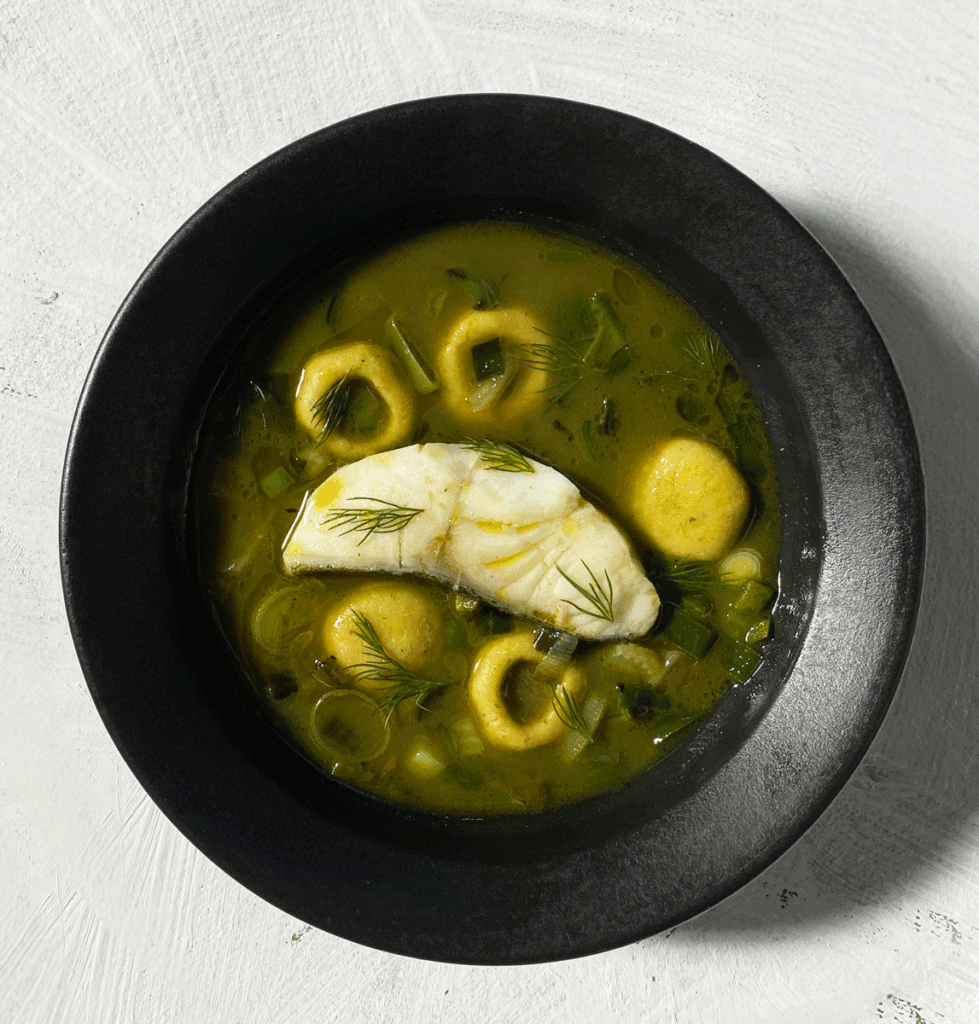 Chochoyotes are small, dimpled masa dumplings. Try making them with Bolita Masa’s heirloom masa.
Serves 4
For the Chochoyotes
- 1 pound fresh heirloom masa
- 1 tablespoon olive or grapeseed oil
- Pinch salt
For the Broth and Fish
- 6 poblano peppers, the smaller the better (about 2 pounds)
- 1 cup packed cilantro leaves
- 1 cup packed flat-leaf parsley leaves
- 2 quarts fish stock (divided)
- 2 tablespoons olive or grapeseed oil
- 1 large leek, cut into ¼-inch wheels and washed
- 6 garlic cloves, thinly sliced
- 1 large fennel bulb, cored, thinly sliced
- 1 jalapeño pepper, seeded and minced
- 3 tablespoons kosher salt, divided
- 1 pound skinless halibut or black cod, cut into 4 pieces
For Garnish
- 2 sprigs of dill (remove thick stems)
- 1 lemon, cut into wedges
To make the chochoyotes: In a large bowl, mix masa, a large pinch of salt, and 1 tablespoon olive oil. Knead until smooth. Portion masa into 1-ounce bolitas (little balls) and gently press a finger into the center of each ball to give it a little dimple. (I have fat thumbs, so I use my index finger.) Place chochoyotes on a plate or sheet pan and set aside.
To prepare the peppers: Thinly slice 2 peppers and set aside. Char the whole peppers over an open flame until the skins are black and blistered. Transfer to a large bowl and cover with a heavy plate. Allow peppers to steam for 10 to 15 minutes, then let cool until you can easily peel off the skin and remove the stem and seeds.
Rough chop the charred peppers and place them in a blender with 2 cups fish stock. Purée until very smooth. Empty the purée into a bowl and set aside, then rinse out the blender and use it to purée the cilantro and parsley leaves with 2 cups fish stock until very smooth. Set aside.
To make the broth: Heat oil in a large saucepan or Dutch oven over medium heat. Add leek, garlic, fennel, strips of poblano, jalapeño, and 1 tablespoon salt. Cook, stirring often until the vegetables begin to soften, taking care not to brown them, about 15 minutes. Add the puréed poblano peppers and stir until very fragrant, about 2 minutes. Add remaining stock and salt to the pot and bring up to a simmer. Add fish and simmer until the fish is cooked, about 4 to 5 minutes. Remove fish, set aside. Increase the temperature a bit to bring your stock to a very gentle boil. Add the chochoyotes to the bubbling broth, cook for 6 to 8 minutes, until all the dumplings float, and then a minute longer. Add the cilantro and parsley purée and remove from heat.
Divide fish among 4 bowls and ladle in some broth. Place chochoyotes on top. Garnish with dill and a squeeze of lemon.