Alive and Bubbling
Fermented Foods Around the Bay
Story and photos by Camille Morgenstern
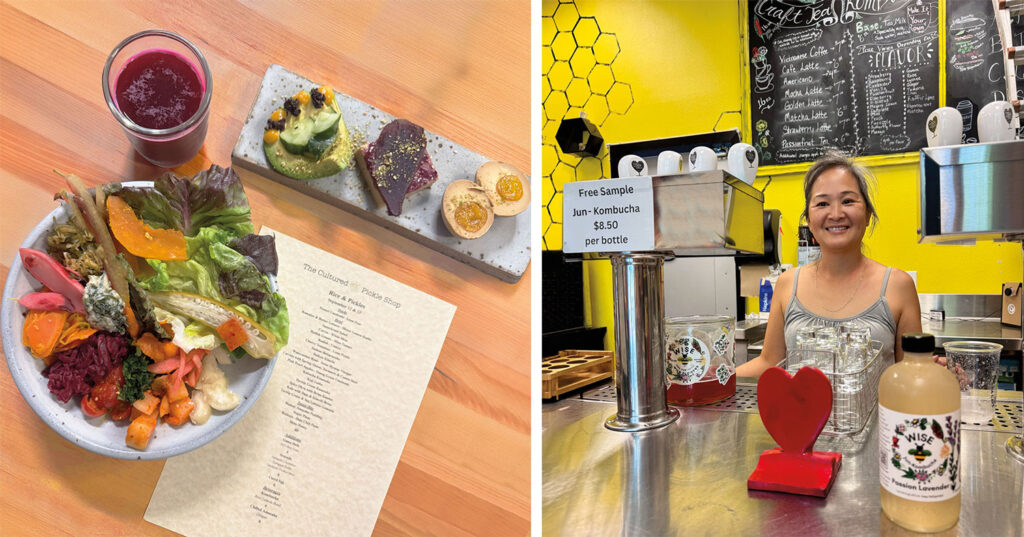
Left: Rice & Pickles weekend pop-up meal also includes an optional cultured egg. Right: Sherry Hoang offers her house-made jun alongside House Kombucha brand drinks at her taproom in Hayward.
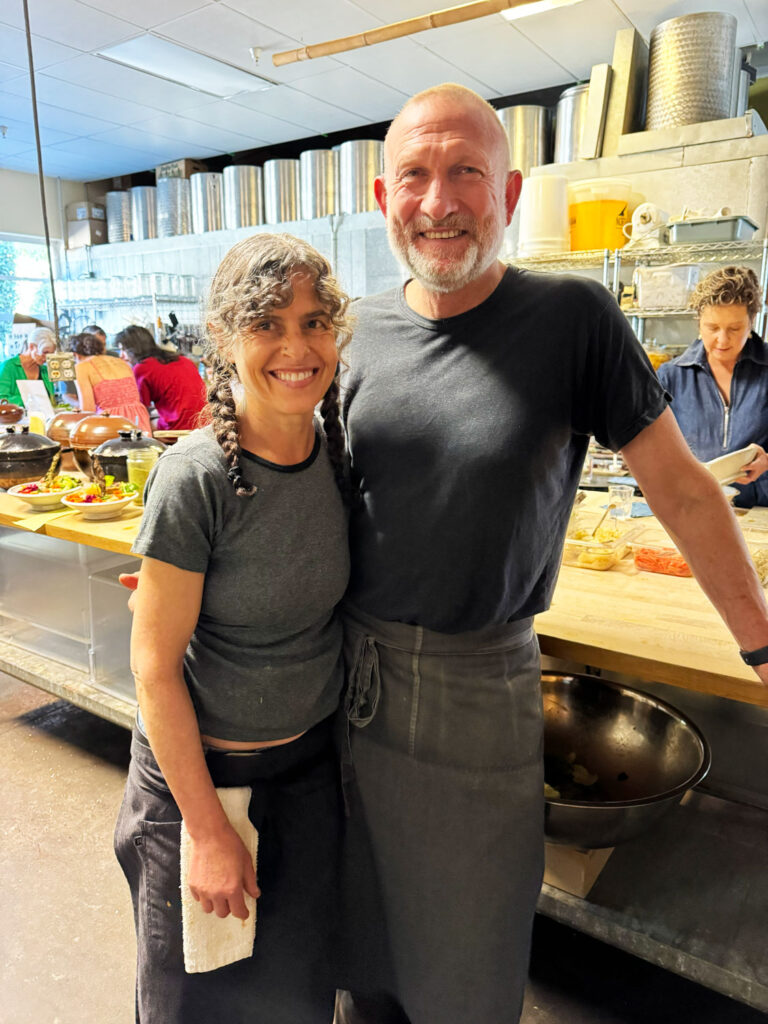
The Cultured Pickle Shop’s co-owners Alex Hozven and Kevin Farley make lacto-fermented vegetables, koji pickles, miso, and amazake, a traditional Japanese fermented sweet rice drink.
Does the word fermentation conjure up visions of crusty loaves made from a bubbling sourdough starter? Or perhaps it evokes glasses of wine and beer, cheese, and a wide array of cultured vegetables like pickles, sauerkraut, and kimchi.
Humans have used fermentation to preserve and transform all sorts of foods since prehistoric times. Even coffee, tea, and chocolate are fermented in early stages of their production. Some fermented foods are deeply rooted in long-standing cultural culinary traditions, while others are unique ideas thought up by curious food artisans.
A good place to start exploring is Preserved, a shop at 5540 College Avenue in Oakland, where you’ll find supplies for almost any home fermentation project—from sourdough to kombucha—along with a huge on-site knowledge base and a community classroom focused on preserved, fermented, and handmade foods. Sign up for a class, search for a unique gift for an epicurean friend, or hang around and learn more about the addictive flavors of fermented foods and the host of benefits they deliver to support a healthy microbiome. On the bookshelf, you’re sure to find Sandor Katz’s Wild Fermentation, the book that’s widely credited with sparking this century’s food preservation revival when it came out in 2003.
Head to 800 Bancroft Way in West Berkeley for a workshop and retail shop brimming with traditional house-made lacto-fermented vegetables, koji pickles, miso, and even amazake, a traditional Japanese fermented sweet rice drink. On weekends at The Cultured Pickle Shop, you’ll also have a chance to dine on Rice & Pickles, a three-course meal showcasing a breadth of fermented preparations (including cultured eggs) made by the shop’s co-owners, Alex Hozven and Kevin Farley. “One of the most common misunderstandings is that you need a background in science to do this work,” says Farley. “These practices have been part of our culinary traditions far longer than our scientific understanding of them has existed.” Farley adds that their business evolved out of personal passion and an appreciation for the local produce: “Our proximity to the highest quality, most diverse produce you can find anywhere,” he specifies. “As preservers, it’s incumbent on us to work with vegetables at their peak. Our work is far more likely to highlight the quality of the produce than to mask or compensate for it.”
Fermentation is deeply embedded in the kitchen philosophy at Berkeley’s Three Stone Hearth, a worker-owned cooperative focused on nutrient-dense foods. Krauts abound in their retail cases at 1581 University Avenue, but the cultured beverage section is where things get especially interesting. You’ll find a variety of kombucha flavors, along with several unexpected sips like kefirs, beet kvass, and shrubs such as the apple herb honey shrub that sounds perfect for a holiday cocktail.
Wise Jun-Kombucha founder Sherry Hoang has been exploring jun, a variation on kombucha that’s brewed with honey rather than cane sugar. Hoang says honey gives the drink a crisper, brighter flavor. Visitors to her taproom at 1240 W. Winton in Hayward can sample flavors like Passion Lavender and Watermelon Mint and fill bottles or growlers with favorites to take home. Her bánh mì sandwich made with house-pickled vegetables demonstrates how, for a dedicated maker, fermentation rarely stops at a single product.
Just before noon at 4201 Market Street in West Oakland, a long line of eaters wait for the door to open at Joodooboo. The menu at this banchan shop and tofu manufactory is built around their house-made dooboo (the Korean word for tofu). Owner Steve Joo’s exquisite fried tofu makes it easy to see why his place rates as a San Francisco Chronicle Rising Star Restaurant. Crisp on the outside with a silky center, the fried tofu comes with white rice and a selection of banchan, the small side dishes that accompany a Korean meal, among them kimchi and other house-pickled vegetables.
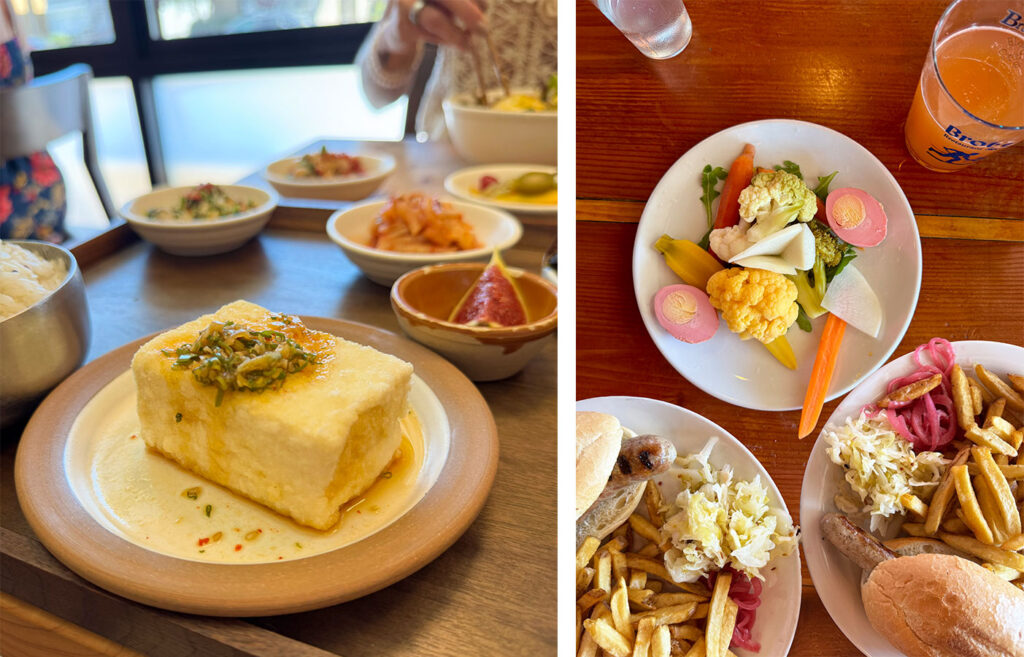
Left: Joodooboo’s Fried Tofu Set comes with an array of fermented banchan. Right: Sauerkraut and pickles spark up the brats at Brotzeit Lokal on the Oakland waterfront.
At Good To Eat (1298 65th Street, Emeryville), Chef Tony Tung and General Manager Angie Lin call on food memories from their childhoods for a menu that offers a deep look at the geography, history, and flavors of Taiwan as it honors both the staples of everyday home cooking and the elaborate traditions of multi-course banquets. Many dishes include fermented and pickled foods made on-site using traditional methods. The restaurant’s golden kimchi with fermented tofu makes a bright starter dish, and other fermented accoutrements like pickled lotus root, pickled local seasonal vegetables, and fermented radish greens add bursts of heightened flavor throughout the meal.
Fermentation takes a Teutonic turn at Oakland’s Brotzeit Lokal (1000 Embarcadero), where a large crowd was enjoying house-made pickles and brats with sauerkraut alongside pints of German and local beer on the waterfront patio one sunny afternoon. These dishes would be just as delicious inside the pub on a rainy El Niño night, and there’s also a small market-style selection of house-made vegan and bacon sauerkraut, sausages, mustards, and other German-inspired staples to take home.
In San Francisco, Shared Cultures miso makers Kevin Gondo and Eleana Hsu have been experimenting with using koji (the mold used for fermenting classic Japanese staples like miso, soy sauce, and sake) to inoculate a wide variety of beans and other starchy foods beyond the traditional soybeans. They also might be credited with inspiring some of the local chefs who are using miso as a flavor building block in dishes that wander far beyond traditional Japanese preparations. For instance, at Rose Pizzeria, you’ll find miso adding savory depth to a Caesar dressing. At Pomet, it becomes part of an Italian-inspired pasta dish with mushrooms. At alaMar in Oakland, look for Shared Culture’s kombu garlic miso incorporated into Dominican-style mofongo.
Another fermented ingredient that’s getting new attention is tempeh, a firm, sliceable fermented soybean cake that traces its roots to Java. In 2023, Indonesian-American friends Feby Boediarto and Melati Citrawireja began making their Reculture Foods tempeh in a traditional Indonesian style. Its nutty flavor and substantial texture make it a versatile addition to everything from stir-fries to sandwiches.
A look at how fermented foods are being made and used today shows deeply rooted traditions sitting easily alongside new cross-pollinated concepts. The underlying techniques remain remarkably consistent, but ingredients and interpretations are continually renewed across cultures and centuries. ♦
Camille Morgenstern is a writer and content creator who shares Brazilian-inspired recipes and reflections on living well the Rio way at theriokitchen.com. She also writes about her perspective as a Brazilian in California on theriokitchen.substack.com.