Rolling with the Tides
A look at local oysters in this El Niño winter
Story and photos by Madelyn Markoe
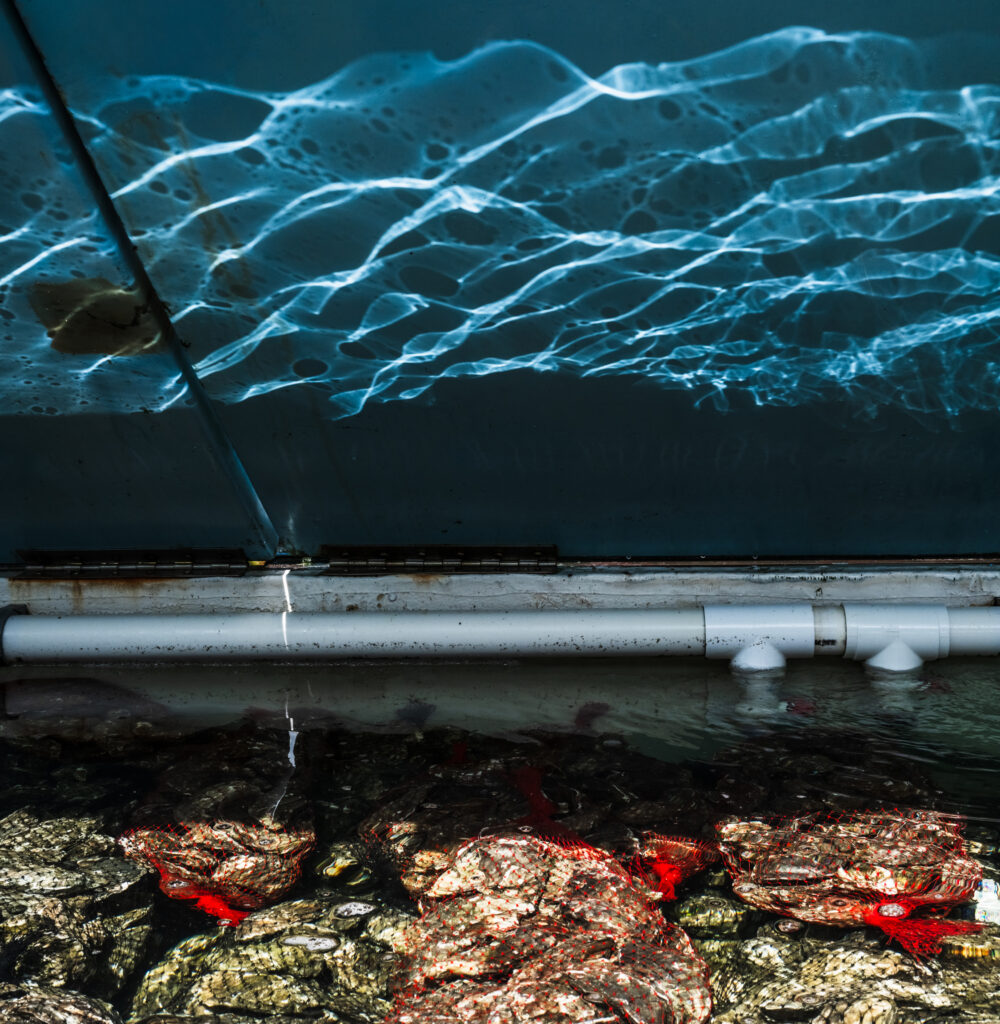
Aquaculture on Tomales Bay
Growing up in Southern California, I spent endless days at the beach. The ocean made me feel alive. It was a place of joy, fear, caution, connection, awe, abundance, and humility. Many of my meals derived from the sea, mostly snapper and other fin fish stuffed into tacos.
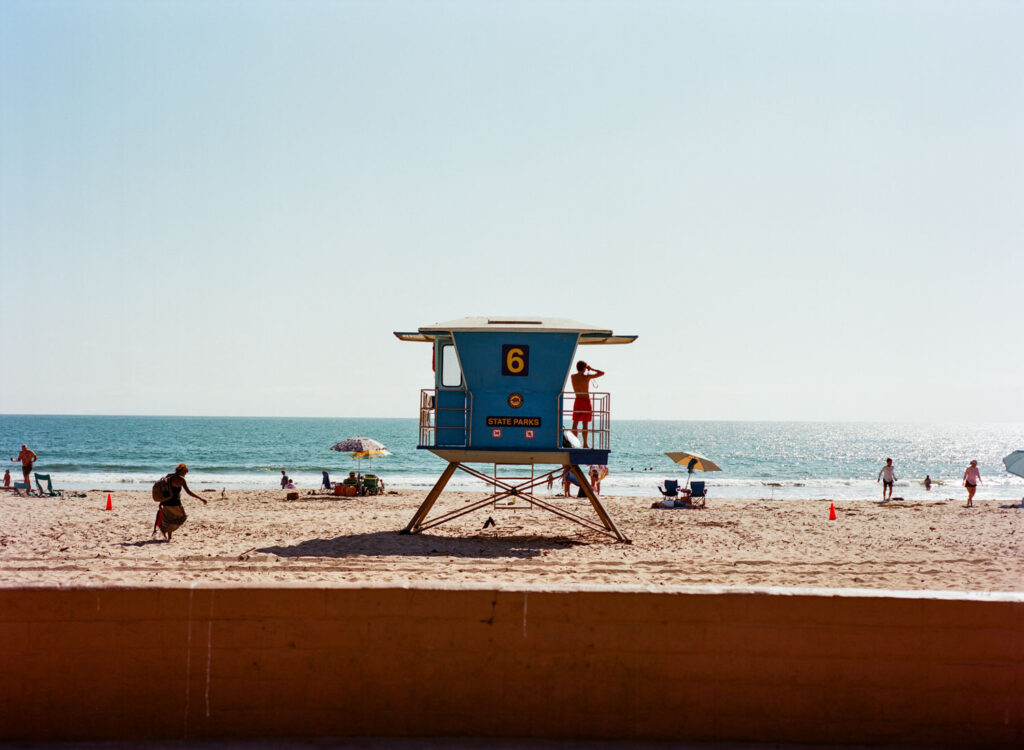
A snapshot memory of days on a SoCal beach
On moving to the Bay Area, my appreciation for seafood swelled with my first oyster on the half shell. It was from a platter of Hog Island Kumamotos and Sweetwaters shared among friends who knew these local delicacies. We polished off a few bottles of Grüner Veltliner, too, as I recall.
Becoming accustomed to the Bay Area’s seasons and unique food scene, I developed a special curiosity about oysters. This year, with a “super” El Niño bearing down, I wondered how these remarkable bivalves would be affected. Would a warmer, more unpredictable ocean environment disrupt the oyster season?
On speaking with oyster farmers, restaurateurs, and a scientist studying the Bay Area’s wild oysters, I learned that the impacts will not be so direct. The message I took to heart was the importance of paying attention to nature.
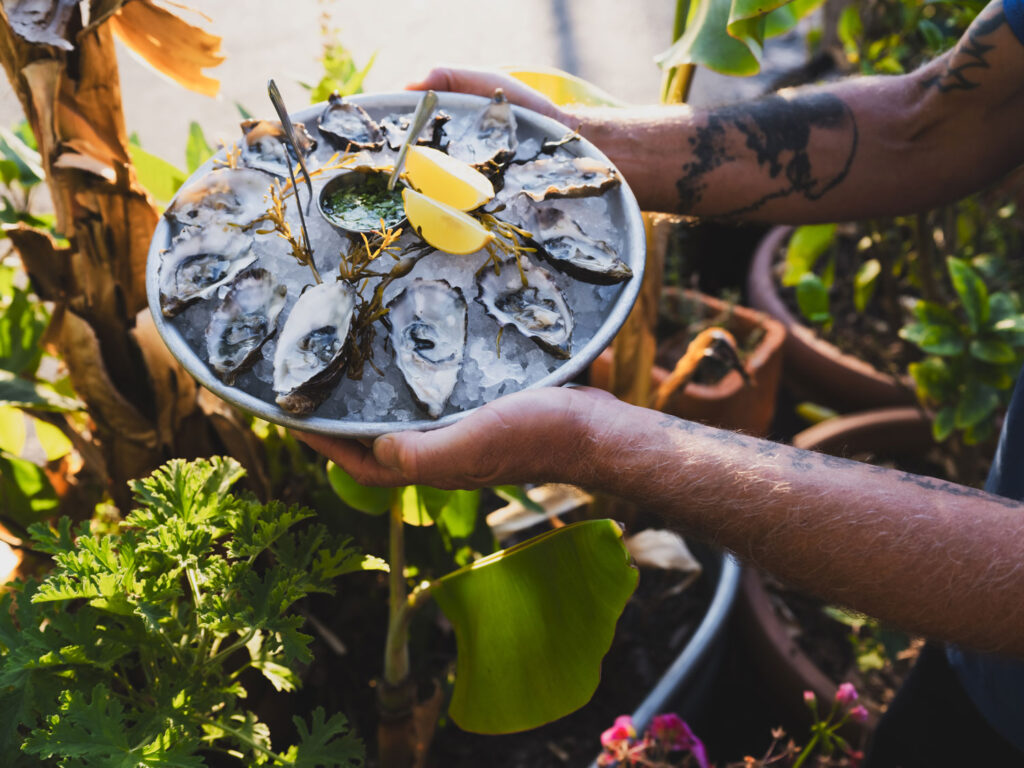
A dozen oysters enjoyed recently at The Cook and Her Farmer in Old Oakland
The Cook and Her Farmer was dark on the afternoon I’d planned to meet Steven Day, the namesake “farmer” at this eatery located at 510 9th Street inside Swan’s Market in Old Oakland. Day also teaches for the Oakland Unified School District, and he had rushed across town when he realized I might not have received his message about the restaurant’s emergency closure that day. He handed me a cupcake as thanks for showing up, and we found a bench where we could sit and talk about oysters.
Day sees himself as a cultivator, not a farmer. He credits Romney Steele—his partner and the restaurant’s namesake cook—for introducing him to oyster farming. “We farmed with Luc Chamberland for close to 15 months at Pickleweed Point Oyster Farm,” says Day, who enjoyed witnessing the oyster life cycle up close as he worked with Chamberland at this short-lived communal oyster farm on Tomales Bay. Also on the team was water quality scientist, Dr. Bud Abbott. “He liked being called ‘Dr. Bud,’” Day adds. “He taught me how to take water samples from a slow-moving boat using a plankton kite.”
Day says his time on Tomales Bay taught him that oysters are always in nature’s hands, no matter what the environmental conditions. He says that El Niño’s warmer surface waters will lessen the typical ocean upwelling and turning. “[This upwelling] takes the layer of nutrients that’s been down three or four hundred feet for hundreds of years and stirs it up to the top,” he explains. Those nutrients feed the phytoplankton, which feed the zooplankton. But in this year’s El Niño, he adds, “that means less of everything that a juvenile oyster wants to eat. If they can’t eat, they can’t develop and grow and form a protective shell. That’s going to make them more susceptible to predators.” It means a less robust crop, and quality will be affected, too, he adds.
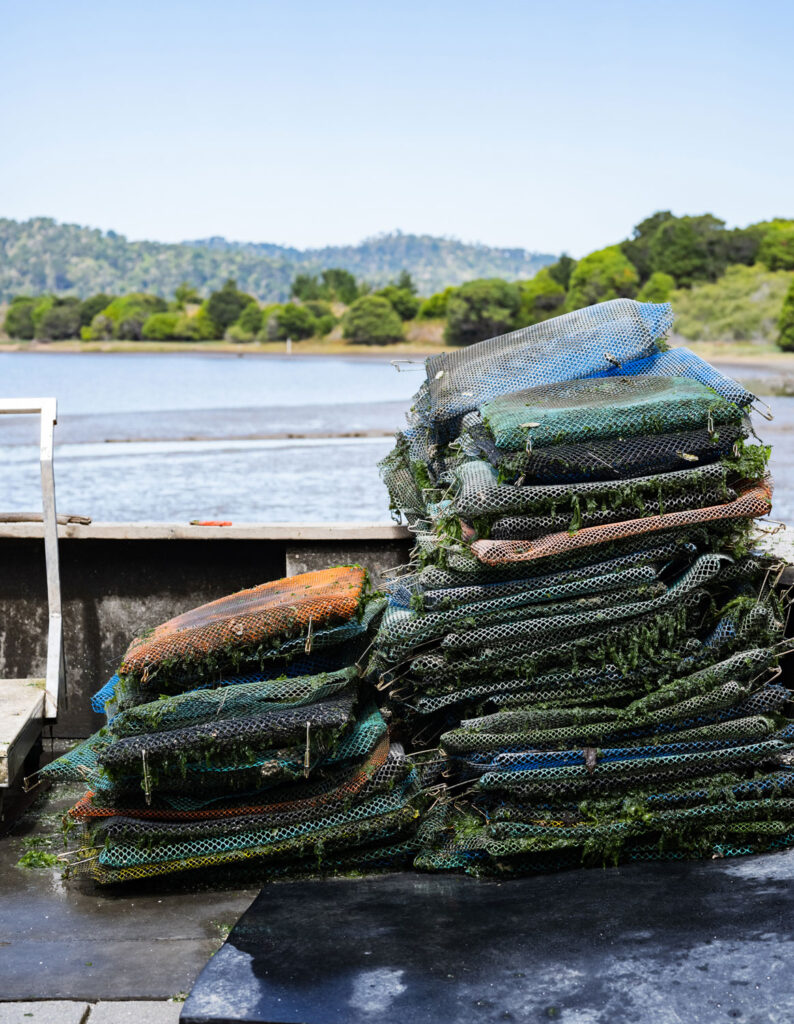
Wondering how wild oysters will fare this winter, I sought out the California State Coastal Conservancy’s lead project manager Marilyn Latta, who works intimately with the Olympia oyster, the only species native to California. The Olympia’s habitat ranges from Baja, Mexico, to Alaska, but the load of toxins they filter as they feed in polluted bay and estuary waters makes them unhealthy to eat.
“Forty percent of California’s rivers empty out to the Pacific Ocean through the San Francisco Bay Delta,” Latta tells me. The Olympia’s numbers are also very low here due to the degraded habitats that the Conservancy is working to restore. Latta recalls the winter of 2017, when they recorded a large die-off due to big atmospheric river events. “We really get hammered hard when there’s a lot of rain, and it can lower the salinity for a long period of time.” She adds that another large stress on bivalves is heat, both in the water and in the air.
An unexpected summer rain is hitting my windshield as I set out for Tomales Bay. My route from Berkeley winds through a landscape that has undergone many changes. After crossing San Pablo Strait on the toll bridge, I enter a deeply shaded grove of redwoods on Lucas Valley Road and then roll through grasslands beside Nicasio Reservoir, where the air is laced with aromas of eucalyptus, aging sage, and petrichor (the earthy scent released when rain falls on dry soil, rock, or pavement).
Soon, I’m on Highway 1, hugging the shore of Tomales Bay as I marvel at the views of this ocean inlet formed by the movement of the San Andreas Fault. With a sharp left turn off the highway, I’m in the makeshift parking lot for the historic Tomales Bay Oyster Company (TBOC), which sits sheltered within the narrow bay. Here, I learn about the farm’s late owner, Tod (Charles) Friend, who started oyster farming with Hog Island Oyster Company in 1990 and purchased TBOC in 2009 when the farm was 100 years old. His daughter, Heidi Gregory, inherited the business after Friend died in a tragic boating accident. She says that they established a second farm site in a nearby tidal flat that can help them continue harvesting through varying environmental conditions.
Martin Seiler, who works as TBOC’s Hazard Analysis Critical Control Point manager, explains that heavy rains dilute tidewater salinity, which places another stress on oysters. Gregory recalls the heavy rain in 2019: “It caused landslides that buried the shellfish,” she says. Wind itself can amplify seawater acidification. “This can harbor both positive and negative effects for oyster health like an increase in beneficial phytoplankton alongside harmful algae blooms and dormant ocean viruses that are triggered by rising water temperature.”
“We have a huge advantage because we have three tanks, and we monitor the weather like crazy,” she adds. “We can hold oysters for about a month if we need to. We do a lot of juggling with whatever is happening, and we’re constantly having problems and constantly solving them. You have to deal with whatever mother nature sends your way.”
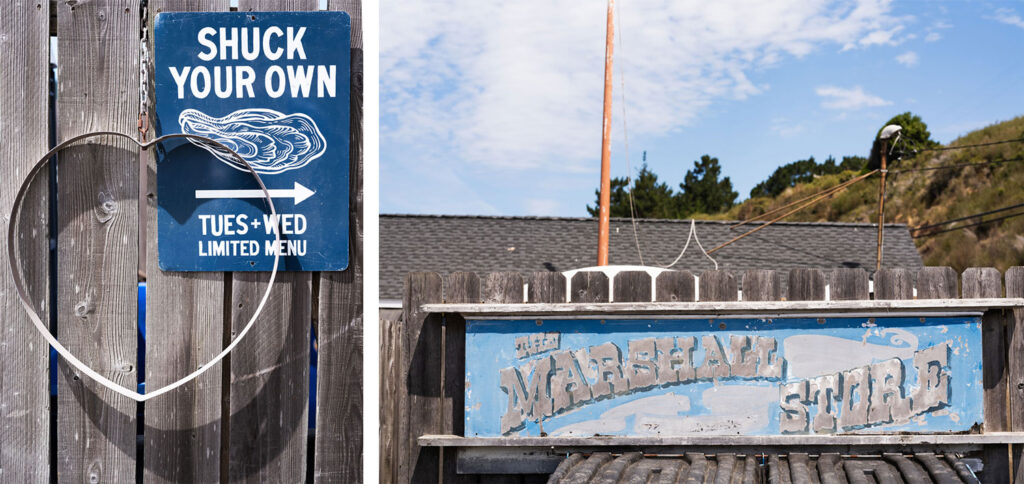
Heidi Gregory’s brother, Shannon, has run the family’s nearby oyster bar at The Marshall Store since 2006. He explains how periods of heavy rain can result in closures of the Tomales Bay oyster beds due to runoff from the local cattle farms: “fecal coliform bacteria, which comes from cow poop,” he specifies. “It’s usually .6 of an inch [of rain] and there’s a five-day closure with an automatic reopening.” He adds that there can be overlapping closures, but since TBOC can hold about 80,000 oysters in its tanks, his restaurant rarely runs out. “I can only think of a few times in the last 20 years when we have not had oysters,” he says. “In that case, we can bring them down from Washington.”
I head up to The Marshall Store, where outdoor tables set beside a small boatyard are flooded with sunshine and refreshed with a briny breeze. Lemon wedges and bottles of hot sauce punctuate the picnic tables where oysters are slurped up into waiting mouths. Here, I recall my first dozen oysters—a circle of half shells on crushed ice—and how they offered that briny creaminess and unmistakable flavor of the sea. Today’s dozen carries a new appreciation for the close attention these farmers pay to nature.
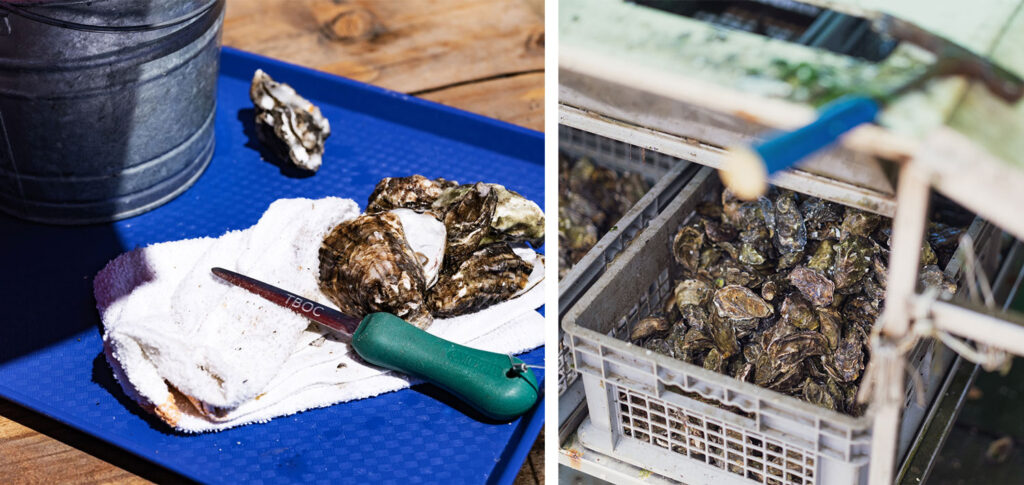
El Niño is never inconsequential, and the climate change effects on our waters should not be dismissed, but Steven Day’s response to my concern about the upcoming wild weather floats on the breeze: “We need to not fret El Niño,” he told me. “I think that we need to roll with it, to see where it’s going, what it’s doing.” ´
Madelyn Markoe is a Bay Area photographer and songwriter whose work explores people, place, and connection through narrative-driven imagery. Her photographs have appeared in Condé Nast Traveler Spain and Bon Appétit. When she’s not behind the camera or with pen and paper, she can be found playing in the wind and surf or at the piano with her cat. madsophotography.com
Visit our Oysters of Tomales Bay guide.