Rediscover What’s Already in Your Kitchen
By StopWaste | Illustration by Gary Handman
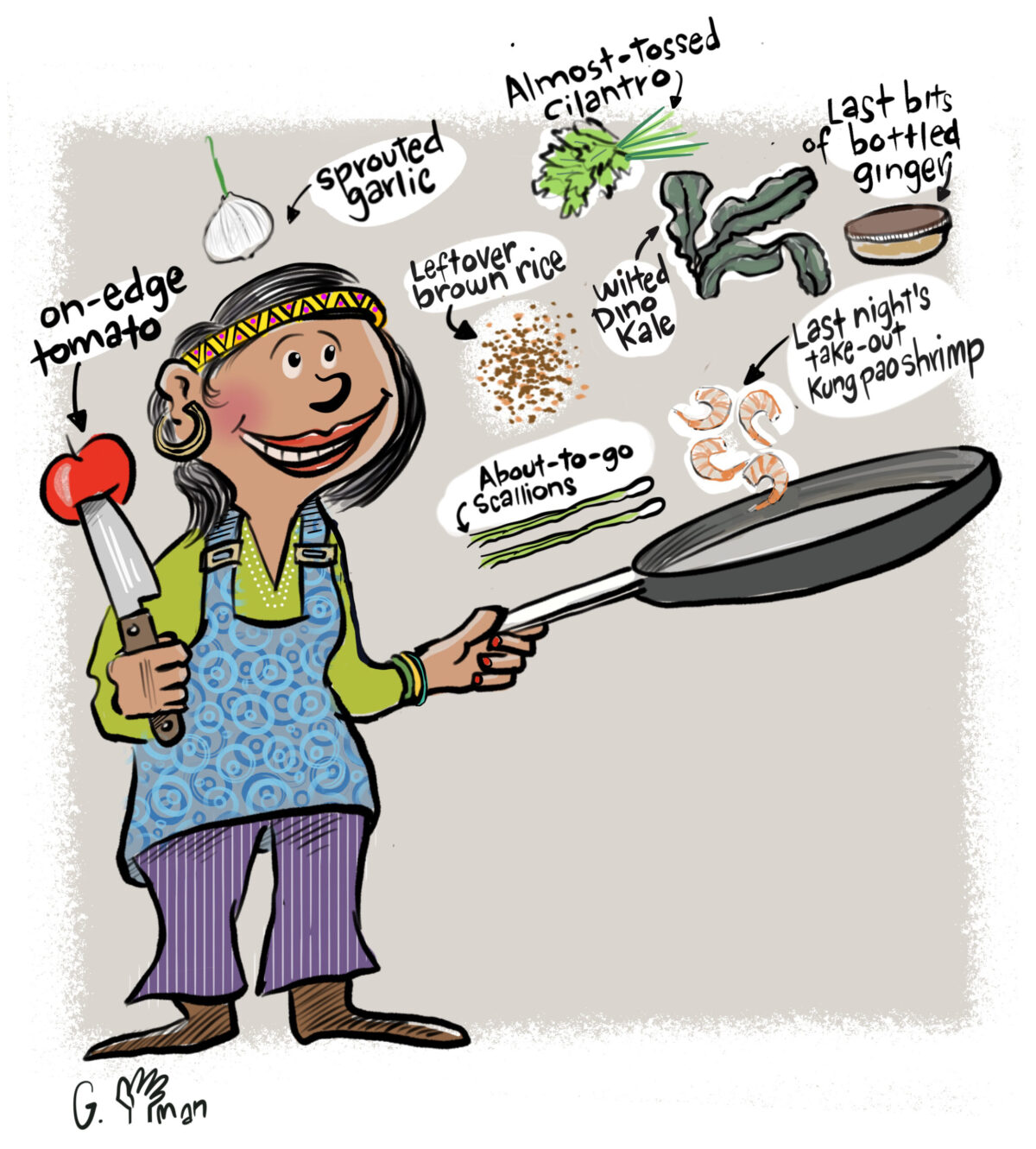
Could Forgotten Ingredients Become Tonight’s Dinner?
Some of the best meals come from creativity rather than a recipe.
- Toss leftover vegetables into a soup, stir-fry, or frittata.
- Blend herbs into pesto, chimichurri, or compound butter.
- Turn ripe fruit into smoothies, muffins, or compote.
- Use leftover beans or grains as the base for a quick soup or grain bowl.
- Make a “clean out the fridge” pasta, fried rice, or pizza topped with small amounts of vegetables, cheese, and cooked meats.
Every home cook has been there. You clean out the refrigerator and discover a jar of pesto tucked behind the yogurt, a new package of tortillas from a couple weeks ago, or a specialty ingredient in the cupboard that you bought for one recipe months ago. You check the date on the package and wonder, “Is this still good, or should I compost it?”
Too often, perfectly good food goes to waste simply because of the date on the package. Though some wasted food is composted along with other organic materials, the rest of it goes to the landfill where it releases methane, a potent greenhouse gas. Research shows that confusion over date labels leads U.S. consumers to throw away about three billion pounds (1.5 million tons) of food every year, worth $7 billion, according to ReFED, a nonprofit working to solve food waste. The reality is that for many foods, the date is about quality—not safety. In fact, one of the best ways to reduce food waste, save money, and make the most of your groceries is to sharpen a skill many home cooks already have: using your senses.
Trust Your Senses
New California legislation (AB 660) simplifies food date labels. Under the new law:
- “Best By” or “Best if Used By” indicates quality.
- “Use By” indicates safety.
- “Sell By” date labels are no longer permitted on most consumer food products because they are intended for retailers to manage inventory and can be confusing for consumers.
For most foods, a “Best By” date is the manufacturer’s estimate of when a product will deliver its best flavor, texture, and quality. After that date, the food may gradually lose freshness or taste but is often still safe to eat if it has been handled and stored properly.
Before discarding food solely because the “Best By” date has passed, check whether it has been stored according to package instructions and inspect it for signs of spoilage, such as off odors, unusual appearance, mold, or damaged packaging. Food safety should always come first. De-package and compost food that shows signs of spoilage or has been improperly stored.
Be Mindful of the Food You Have
Sometimes the most delicious ingredient in your next meal is already waiting in your pantry or the back of your refrigerator. Whether it’s a loaf from your neighborhood bakery, local produce from the farmers’ market, a simple can of black beans, or ingredients picked up for a special meal, every item represents time, money, labor, and resources.
The date is just one piece of information. Before you toss an item because of the date on the package, take a closer look. Your eyes, nose, and taste buds can often tell you even more.
Help Your Food Stay Fresh Longer
The best way to reduce waste is to give food the best chance to last.
- Store foods properly. Keep your refrigerator at 40°F or below and your freezer at 0°F.
- Keep ingredients visible. Place foods that need to be used soon toward the front of the refrigerator or pantry.
- Label leftovers. A simple piece of tape with the date shows when you made them.
- Freeze what you won’t use in time. Bread, shredded cheese, herbs, broth, and many cooked meals freeze well. Just be sure to add a label and date.
- Buy with a plan. Before you shop, check what you already have and think about how you’ll use it throughout the week.

For more information on how to make sense of date labels along with tips, recipes, and tools for making the most of the food you have, visit StopWaste.org/DateLabels.