Beyond Vegan
An Evolution in Plant-Based Dining
Story and photos by Camille Morgenstern
Long before “plant-based” became a marketing term, a generation of writers and restaurateurs was reshaping how we think about the foods we choose to eat. In 1971, Frances Moore Lappé’s Diet for a Small Planet connected everyday food choices with environmental stewardship, helping to launch a modern vegetarian movement. In 2008, journalist Michael Pollan picked up the conversation with In Defense of Food: An Eater’s Manifesto, another important book that contributed to our evolving consciousness around food, health, and agriculture.
The past half century has seen plant-based dining thrive in the Bay Area, but recent closures of beloved vegan institutions like Malibu's Burgers and Millennium came as a surprise to many in our community and even led some Bay Area media outlets to proclaim a vegan restaurant extinction. Millennium (which quickly reopened) has offered proof that vegan cuisine retains a strong following, and along with San Francisco’s Greens Restaurant, which celebrates its 50th anniversary this year, Millennium continues to demonstrate that plant-based cuisine can be ambitious, refined, and destination-worthy.
The current century has brought new angles to plant-based dining. When Café Gratitude came to Berkeley, it introduced “live foods” and a respect-based imperative that appeared as a cultural touchstone, offering a vision of wellness that felt ahead of its time. But a simultaneous shift back to animal-based foods had already begun with the publication in 2001 of Dr. Loren Cordain’s bestseller The Paleo Diet: Lose Weight and Get Healthy by Eating the Foods You Were Designed to Eat, and meat and dairy regained a role in optimizing protein intake and meeting macro counts, a trend that continued with keto and even carnivore diets.
Even as the values championed by pioneers like Greens and Millennium have seemed endangered, they have, in many ways, prevailed. In today’s Bay Area dining scene, there’s continued emphasis on local sourcing with growing awareness around ingredients that can trigger food allergies and sensitivities. Restaurants are often both vegan- and omnivore-friendly, so diners aren’t required to choose a single food identity.
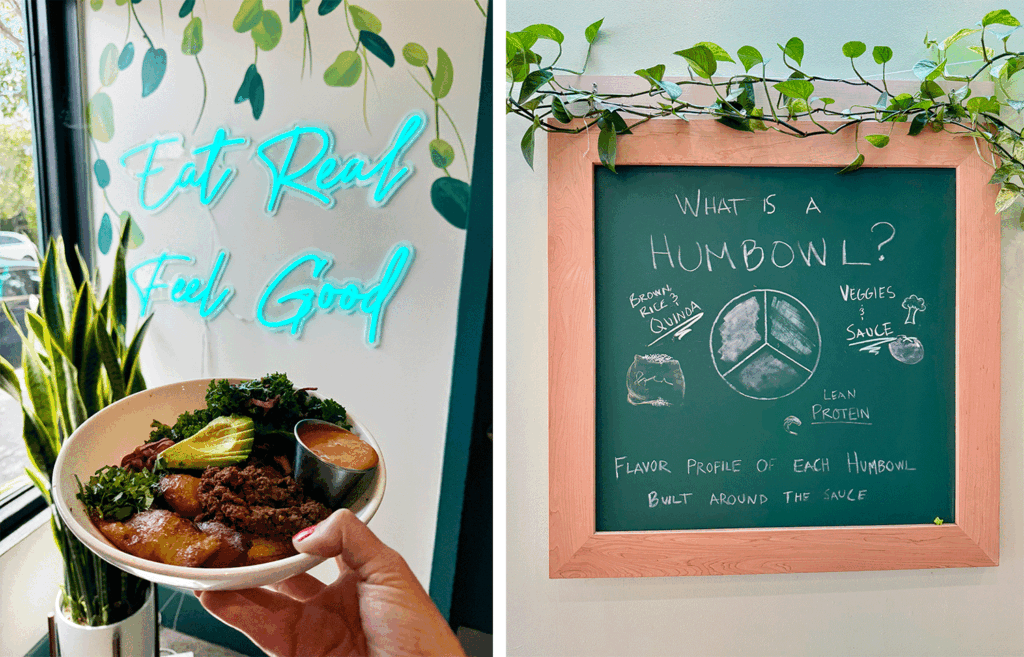
Find "clean casual" at Kitava (left), and "healthy fast food at Humbowl (right).
Kitava, which operates multiple East Bay locations, centers the idea of “real food everyone can enjoy.” Notably, this business doesn’t emphasize that its menu is entirely gluten-free and instead positions itself as “clean casual,” prioritizing ingredient quality and transparency while offering balanced signature bowls and customizable meals built around vegetables and grains with thoughtfully sourced animal proteins.
Humbowl offers a “healthy fast food” alternative that is gluten-aware and vegan-optional. Bowls start from a vegan base of grains and veggies that guests customize with a choice of protein, add-ons, and (my favorite feature) takeoffs. The company also operates a neurodiverse hiring program that creates meaningful employment opportunities and fosters inclusion.
At Gather in downtown Berkeley, a philosophy around local sourcing, ingredient transparency, and vegetable-forward cooking has thrived since 2009. Built on the idea that restaurants can be a force for good, Gather’s menu accommodates a range of dietary preferences, so guests can just as easily order a local lettuce salad as a Marin Sun Farms smashburger.
The East Bay has many longtime vegan favorites still serving a dedicated clientele. The Butcher's Son in Berkeley remains a destination for plant-based deli classics, while Vegan Mob has successfully evolved into a pickup and delivery business offering its bold comfort food from three Bay Area locations. Souley Vegan just held a reopening celebration in July, signaling renewed momentum for a beloved vegan institution.
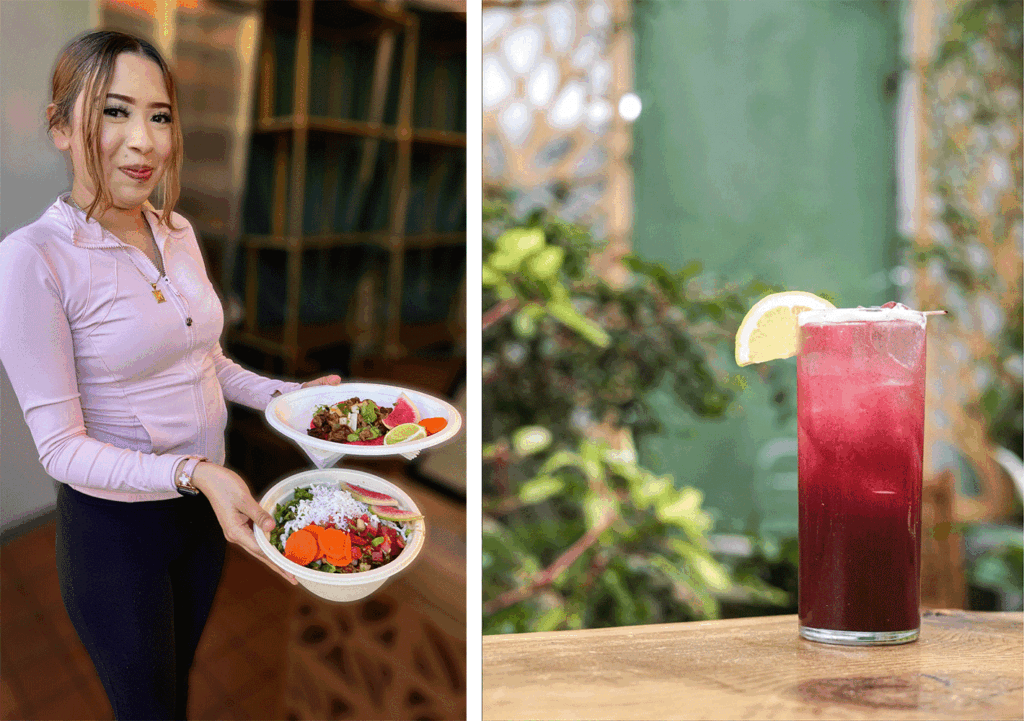
Vegan tacos and a salad at Rico Rico Vegano (left). Gather in Berkeley's Cocktails for Change program earmarks a portion of proceeds for community organizations that are making a difference. (Photo courtesy of Gather)
Many vegan restaurants draw strengths from cultural culinary traditions. On a summer visit to Rico Rico Vegano, I found the sidewalk lined with stylish Oaklanders waiting for Mexican taqueria favorites that seemingly happen to be vegan. Berkeley’s Cha-Ya, with its vegan sushi, tempura, and noodle dishes, has quietly endured for more than a quarter century with staying power that speaks to a loyal community.
Rather than competing with Cha-Ya’s legacy, Berkeley’s Tane Vegan Izakaya represents a hip, new expression. Securing a reservation on a busy evening can be challenging, and it’s easy to understand why. The food is thoughtful, beautiful, and meticulously prepared. Omnivores are unlikely to feel deprived when presented with tomato nigiri sliced and dressed with the care one might expect given to a piece of pristine ahi. Creative rolls populate a menu that sparks curiosity and delivers the balance of flavor and texture sushi lovers seek. The Ewa Roll combines enoki tempura and avocado topped with smoked beet aioli, yuzu seaweed pearls, and matcha salt. Presentation, flavor, and craftsmanship are at the forefront, with veganism woven naturally into the experience.
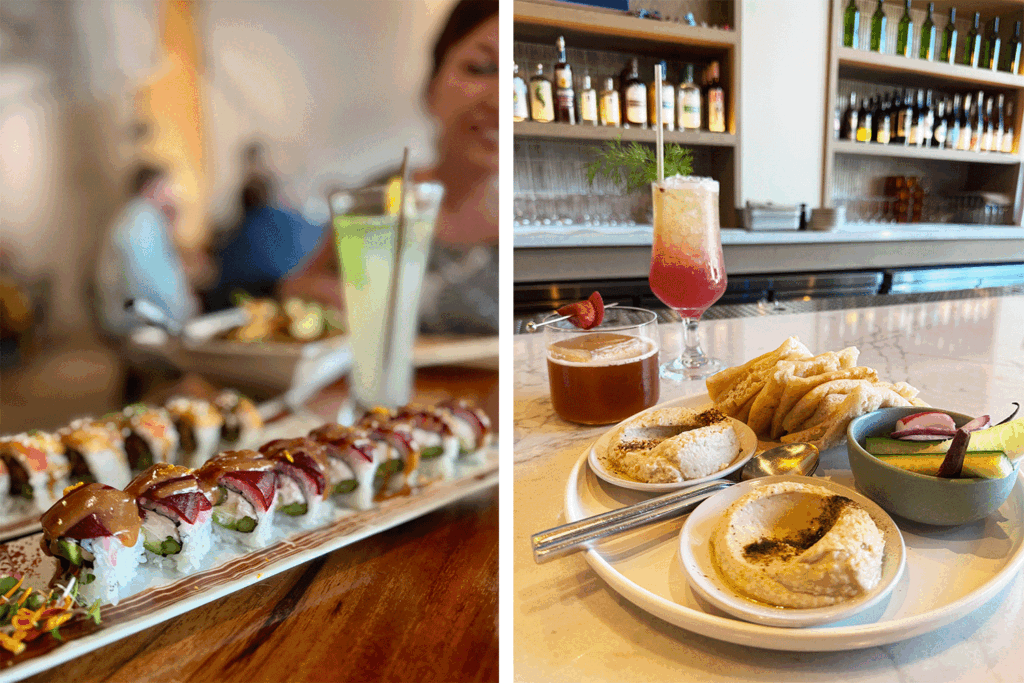
The Leahi roll at Tane Vegan Izakaya (left) includes smoked beets, cream cheese, asparagus, avocado, sweet mustard, orange zest, roasted cashews. Vibrant alcohol-free cocktails pair well with a Sipeos gluten-free pinsa (flatbread) plate with hummus and baba ganoush (right).
The Bay Area’s first vegetarian Mediterranean concept restaurant, Sipeos in Walnut Creek, takes an especially accommodating approach with vegan, gluten-free, and dairy-free options in its rice bowls, veggie burgers, skewers, pinsa, salads, and specials. We enjoyed the crisp gluten-free pinsa (flatbread) with a range of toppings—Pesto, Eggplant & Hot Honey, and Romesco Impossible Kefta—and a vegan feta that was so delicious we had to double check it was dairy free. The restaurant’s inclusive bar program places alcohol-free spirits front and center on the back bar and on the menu in a subtle-but-telling reflection of how the decade’s interests in wellness, community connection, and recreation are shaping the dining experience.
The legacy of the Bay Area’s vegetarian and vegan pioneers has many appreciators, but the ascendant values of plant-forward cooking—thoughtful sourcing, ingredient transparency, and respect for dietary preferences—have helped define a broader, more inclusive food culture nurtured in the Bay Area and beyond. Clearly, we have more ways than ever to put Michael Pollan’s famous seven-word philosophy into practice: Eat food. Not too much. Mostly plants. ♦
Camille Morgenstern is a writer and content creator who shares Brazilian-inspired recipes and reflections on living well the Rio way at theriokitchen.com. She also writes about her perspective as a Brazilian in California on theriokitchen.substack.com.
Millennium Restaurant
5912 College Ave, Oakland
millenniumrestaurant.com
Greens Restaurant
Building A, 2 Marina Blvd, San Francisco
greensrestaurant.com
Kitava
375 40th St, Oakland
1187 Solano Ave, Albany
1699 N California Blvd, Walnut Creek
kitava.com
Humbowl
2975 College Ave, Berkeley
humbowleats.com
Gather
2200 Oxford St, Berkeley
gatherberkeley.com
The Butcher’s Son
1954 University Ave, Berkeley
thebutchersveganson.com
Vegan Mob
Pickup and delivery from two locations
500 Lake Park Ave, Oakland
1745 Sonoma Blvd, Vallejo
veganmob.biz
Souley Vegan
101 Broadway, Oakland
souleyvegan.com
Rico Rico Vegano
3205 Lakeshore Ave, Oakland
ricoricovegano.com
Cha-Ya
1686 Shattuck Ave, Berkeley
chaya-berkeley.com
Tane Vegan Izakaya
1956 Shattuck Ave, Berkeley
tanevegan.com
Sipeos
126 S Broadway, Bldg 4, #1040, Walnut Creek
sipeos.com
Escondidinho
A Brazilian Shepherd’s Pie
Recipe and photo by Camille Morgenstern
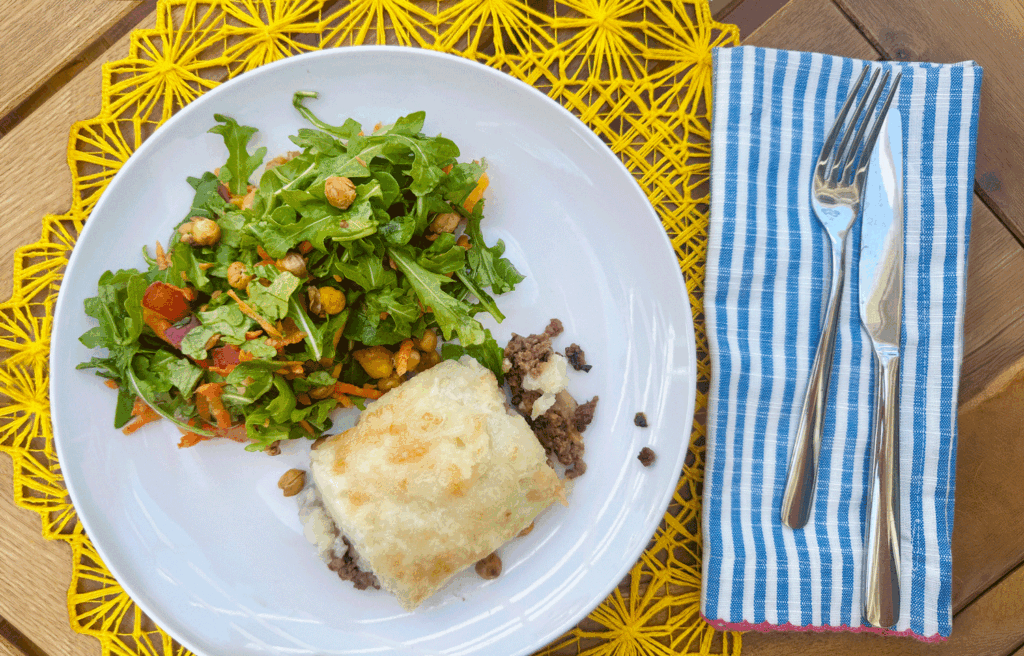
Escondidinho translates roughly as “little hidden one.” What’s hidden is a savory filling tucked beneath a blanket of creamy mashed potatoes, which in Brazil would be cassava, a dietary staple. The traditional filling is beef, but in the spirit of expanding possibilities into plant-forward eating, I’ve offered an alternate filling—a rich wild mushroom ragù to celebrate the coming mushroom season. Whichever you choose, the essence of escondidinho prevails in the simple ingredients assembled into a deeply comforting and nourishing dish.
Serves 6–8
For the potato topping
- 1½ pounds Yukon Gold potatoes, peeled and cut into chunks
- 2 tablespoons butter or vegan butter
- ½ cup milk or unsweetened plant milk
- 1 teaspoon kosher salt
- Freshly ground black pepper
- 1 egg, lightly beaten (optional for finishing)
- 1 cup shredded mozzarella or shredded vegan cheese (optional for finishing)
For the Filling
- 12 ounces ground beef or 2 pounds mixed mushrooms (cremini, shiitake, oyster, maitake, chanterelle), finely chopped
- 1 tablespoon olive oil
- 1 large yellow onion, diced
- 4 cloves garlic, minced
- 2 tablespoons tomato paste
- 1 teaspoon ground cumin
- 1 teaspoon kosher salt
- ½ teaspoon black pepper
- 1 teaspoon fresh thyme leaves (or ½ teaspoon dried thyme)
- 1 (14-ounce) can tomato sauce
- 1 tablespoon soy sauce or liquid aminos
- ¼ cup chopped parsley
To prepare the potato topping: Place potatoes in a large pot and cover with cold salted water. Bring to a boil and cook until fork-tender, about 15–20 minutes. Drain well and return potatoes to the warm pot. Add the butter, milk, salt, and a few grinds of black pepper. Mash until smooth and creamy. Set aside.
To prepare the filling: If you’re using ground beef, heat the olive oil in a large skillet over medium heat. Add onion and cook until softened, about 6 minutes. Stir in garlic and cook for 1 minute more. Add the beef and cook until browned, breaking it into small pieces. If you’re using wild mushrooms instead, heat the oil and then add the mushrooms. Cook, stirring occasionally, until liquid evaporates and mushrooms begin to brown, about 12–15 minutes. Add onion and continue cooking until softened. Stir in garlic and cook for 1 minute more. Stir in tomato paste, cumin, salt, pepper, and thyme. Cook for 2 minutes, allowing tomato paste to caramelize slightly. Add tomato sauce and soy sauce (or liquid aminos). Simmer for 10–15 minutes, until thickened. Stir in parsley and remove from heat.
To assemble: Preheat oven to 400°F. Spread filling evenly in an 8- by 8–inch (or similar-size) casserole dish. Spread mashed potatoes completely over the filling. For a traditional golden finish, brush the surface lightly with beaten egg and sprinkle the top with mozzarella or vegan cheese.
Bake for 25–30 minutes, until heated through and lightly golden on top. For additional browning, place under the broiler for 2–3 minutes, watching carefully. Allow the escondidinho to rest for 5–10 minutes before serving.
Serve with a crisp green salad dressed with a simple vinaigrette.
Camille Morgenstern is a writer and content creator who shares Brazilian-inspired recipes and reflections on living well the Rio way at theriokitchen.com. She also writes about her perspective as a Brazilian in California on theriokitchen.substack.com.