IN SEASON: Shell Beans & Asian Pears
Story by Barbara Kobsar | Art by Charmaine Koehler-Lodge
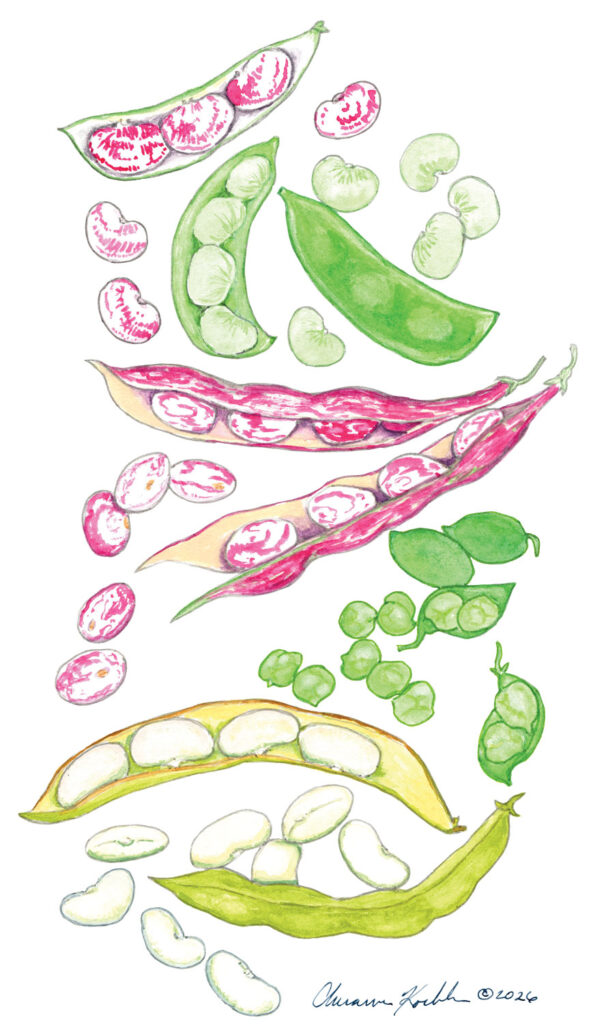 Fresh shell beans are a special pleasure of summer’s end. Often called shellies or shuckies in the South, they are mature and fully formed in their pods but tender enough to enjoy fresh. The pods of fresh shell beans are leathery, and you can feel the beans inside. These same beans, if left on their vines or bushes, will eventually dry in the pods to become the familiar pantry staple we cook into soups and stews on cold winter nights.
All types of beans can be eaten in their fresh stage, but whether your produce market will offer them in the pod is another matter. Shell beans are more the pleasure of home gardeners, who have their pick among bush- or pole-type plants. I especially like growing Lima beans, named for their origin around Peru’s capital region. Baby limas are bush beans, and the larger limas—commonly referred to as butter beans—are trained to climb up poles.
Other garden beauties include the borlotti (aka cranberry bean), which has real eye-catching appeal with its red-streaked pod and plump beige beans splashed with red and pink. Much of the beautiful color is lost in cooking, but the pleasantly nutty flavor remains. Fresh garbanzo beans (green chickpeas) grow on bushy plants with distinctive fern-like foliage. Their tiny white, pink, or purple flowers turn into fuzzy little seedpods that hold only a bean or two. Fresh garbanzos are good in a 5-minute sauté with olive oil or tossed into a stir fry. You can even blend them into a paste to make hummus!
White-colored beans like cannellini, navy, and great northern can be used in their fresh stage, too, and like the dried versions, they tend to work interchangeably in many recipes. Many members of my extended family claim to have the “best” secret recipe for baked beans, but I suspect they all use navy beans, which acquire a creamy texture as they slowly cook. Great northerns are used in all the “best” white chili recipes.
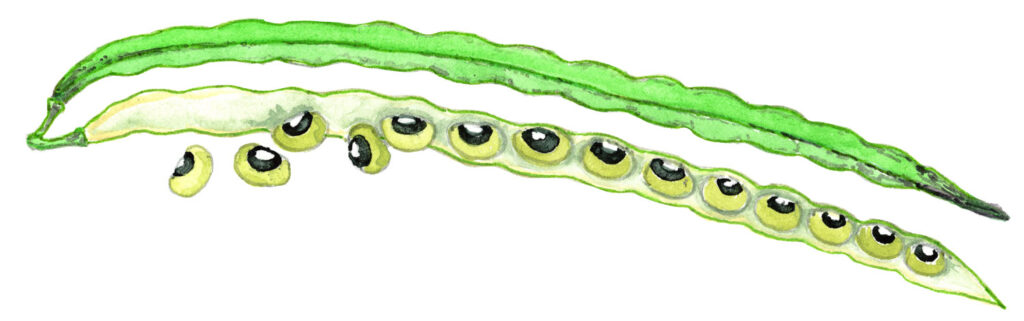
Fresh black-eyed peas (aka black-eyed beans or cowpeas) are prized for their rich load of protein and fiber and for how they retain their shape when cooked. Their earthy, slightly nutty flavor makes them popular in fall stews and soups. If you pre-cook and cool them, they are delicious in salads or dips.
Once you have shelled your beans, place them in a saucepan and cover with water. Bring to a boil and then reduce the heat to a simmer. Cover and cook for 15 to 30 minutes (depending on the size of the beans) until tender and creamy. Drain and use immediately in a pasta dish or let cool to add to a salad.
Since fresh shell beans are moist, they can mildew quickly. Shell and use within a day or two of purchase or freeze for later.
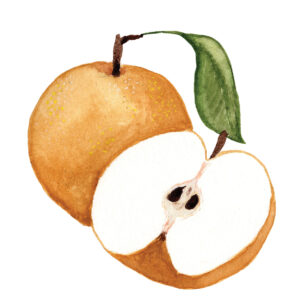
I always look forward to this season’s harvest of Asian pears. Sometimes called pear apples, these fruits are juicy like pears and crisp like apples. Despite those qualities, they are not hybrids of those two fruits but are truly pears. Chinese immigrants seeking their fortune in the California Gold Rush brought over seeds and cuttings; however, credit for developing Asian pears for commercial growing goes to researchers at the University of California.
Unlike European pears, Asian pears are picked ripe and ready to eat. They are great keepers and can be stored in the refrigerator in a cloth or paper bag for up to eight weeks. Asian pears are generally blander in flavor than ripe European pears, but their crisp texture can’t be beat in salads, for snacks, or for a quick appetizer wrapped with a slice of prosciutto. To prevent browning after cutting, soak slices for 3 to 4 minutes in a mixture of 1 tablespoon fresh lemon juice and 1 cup water. Pat dry before using. ♦
Fresh Shell Bean Bruschetta
When fresh shell beans appear at the market (or in your garden), pick out a pound of pods and you’ll have the amount of shelled beans you need for this recipe.
 Serves 4
- 1½ cups cooked fresh shell beans (cannellini, borlotti, black-eyed peas, or a mixture)
- 2 tablespoons extra virgin olive oil
- 2 tablespoons pear balsamic vinegar
- Salt and pepper to taste
- 8 (½-inch) slices ciabatta or other crusty bread, toasted
- ½–¾ cup crumbled feta cheese
- 1 Asian pear, thinly sliced
Puree beans, olive oil, and vinegar in a food processor until creamy and smooth. Season to taste with salt and pepper. Spread puree on ciabatta toasts. Top with cheese and a slice or 2 of Asian pear to serve.
Veteran journalist and cookbook author Barbara Kobsar focuses on traditional home-cooked meals using local produce. Find her at the Walnut Creek and San Ramon farmers’ markets selling her Cottage Kitchen jams and jellies.
Artist Charmaine Koehler-Lodge grows most of her family’s food in their large home garden.