Laotian Delights in Full Bloom at Lao Garden Restaurant in Berkeley
Story and photos by Anna Mindess
Walls festooned with a colorful constellation of flowers and butterflies. Gentle music in the background. The menu is intriguing, but where to start?
At Berkeley’s Lao Garden, chef-owner Kanlaya Palivan is always ready to help her guests discover traditional Laotian cuisine. She says it’s not hard to find restaurants that serve a Lao-Thai hybrid, where familiar coconut milk curries (a staple of Thai cuisine) are paired with white rice, but here at Lao Garden the flavors are more complex and multi-layered, with a fine balance of salty, sweet, acidic, and umami. Sticky rice is central, and many dishes incorporate heaps of fresh herbs: lemon grass, ginger, galanga, mint, cilantro, basil, dill, and makrut lime leaves. Padaek, a pungent fermented fish sauce with shrimp and crab pastes, adds a distinctive edge to fare like thum lao lao, a shredded papaya salad with a wedge of fresh cabbage, a tangle of thick rice noodles, and pork cracklings.
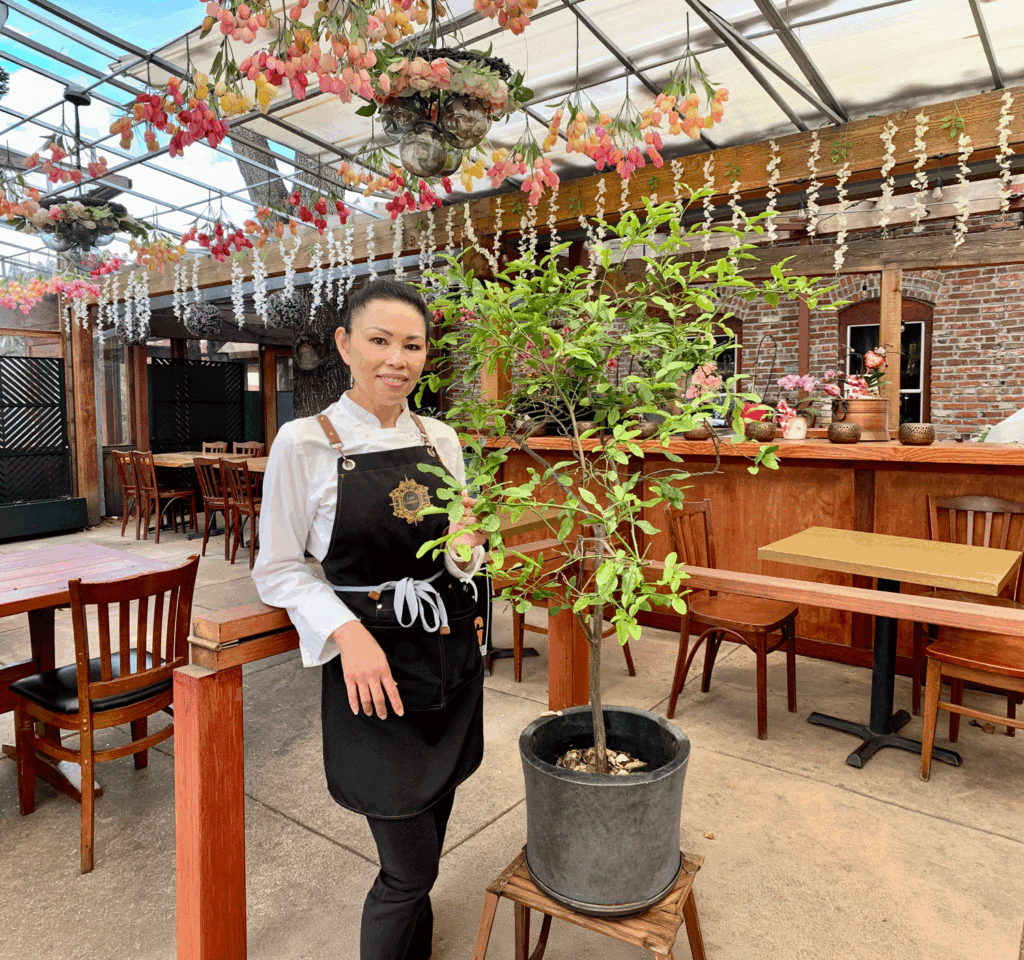
Lao Garden chef-owner Kanlaya Paliram harvests makrut lime leaves for the kitchen on the restaurant’s back patio.
Palivan was in grade school when her family arrived in Wichita, Kansas. She easily adopted her friends’ tastes for typical Midwest foods, but her mother and aunts cooked Laotian dishes at home. Like generations of immigrants, they had trouble locating key ingredients and made do with what they could find. In Laos, sticky rice is used like a utensil to pinch and scoop up foods, but in Kansas, Uncle Ben’s had to suffice. When the family relocated to Merced, California, during Palivan’s high school years, they landed among a large population of Asian immigrants and the ingredients that had been missing became easier to find.
When her schooling ended, Palivan went into tech. Through 30 years of long commutes to and from Silicon Valley, her thoughts often turned to the Lao dishes her mother, Thu Lith, taught her to cook. Palivan says her friends appreciated the food she carried forward from her mom’s heritage, and she dreamed of a new chapter when she would share her Laotian cultural legacy. “Great ideas come to me when I am driving, and this restaurant was one,” she says.
Palivan’s main goal in opening the restaurant was to introduce local customers to her Laotian food, people, and culture. “You learn about any culture through food,” she says. Palivan adds that people who have visited Laos often come in looking for real Laotian food.
When she meets guests who are new to Laotian food, Palivan guides them into the mysterious menu by asking, “What are you craving today? What kind of protein do you like?” She might suggest they try nam khao, a dish of crispy rice balls topped with slices of pork sausage (or tofu for vegetarians), or laab gai, a preparation of minced chicken with toasted ground rice and fresh herbs (recipe on next page). Or she might suggest a beloved Laotian party food that appears on her menu as Thu Lith’s Saikoo to honor her mother. Palivan recalls Thu Lith rising early on celebration days to make these tapioca balls stuffed with ground pork, sweet radishes, and shallots. It takes hours to grind the onions and garlic and cook them carefully until caramelized and to form the tapioca coating before the balls are steamed. Palivan says that while she emulates her mother’s recipe, she feels she can never fully replicate it.
Palivan feels gratified when Laotian customers thank her for representing their food and culture, and they recognize the key flavor of the fish sauce padaek. “We get it in a bottle and mix it in house with shrimp and crab pastes. It’s very funky and pungent. People either really like it or not.” She says that Laotians like food to be quite spicy. “I grew up eating very spicy food. ‘The more spice the better’ is what we say.” Now in her mid-50s, she regrets having to back off on the spice for her own palate. “It’s still good, now,” she says wistfully, “just with less spice.”
Since Palivan and her staff want every guest to enjoy their experience, spice levels in all dishes at Lao Garden are adjustable. Vegan or vegetarian options are available as well, and anyone who needs to avoid gluten is in luck: “Our menu is also 100 percent gluten-free,” says Palivan. “Wheat was not traditionally grown in the tropical climate of Laos.” Lao Garden chefs also use gluten-free versions of soy sauce and oyster sauce when asked.
Lao Garden’s drink menu features beautiful drinks like the vivid blue lemonade Palivan makes with an extract from butterfly pea flowers. “It is very popular in Southeast Asia and has many health benefits,” she says. Lao Garden’s iced tea made from lychee, a Southeast Asian fruit, also has health benefits, and they put a lychee on the straw for fun.
A favorite way to end a meal is with kao lasong, a traditional Southeast Asian chilled dessert with vibrant green pandan-flavored jelly noodles that float in a rich, sweet coconut milk broth and palm sugar syrup, served over crushed ice.
Palivan still finds herself driving a lot, and her latest great idea is a second Lao Garden. The location? “San Jose’s Santana Row,” she replies. Why? “Because they don’t have Laotian food there,” she says with a smile. ♦
2514 San Pablo Ave, Berkeley | laogarden.net
Anna Mindess is a multi-award-winning food writer living in Berkeley, California, who focuses on food, culture, and travel. Her work has appeared in theLos Angeles Times, Washington Post, AFAR, Gastro Obscura, Fodor’s, and Lonely Planet, among others. Anna also works as an American Sign Language interpreter and seeks out Deaf-owned restaurants wherever she travels. Follow her on Instagram @annamindess and find her stories at annamindess.contently.com.
Laab Gai
Recipe by Kanlaya Palivan of Lao Garden
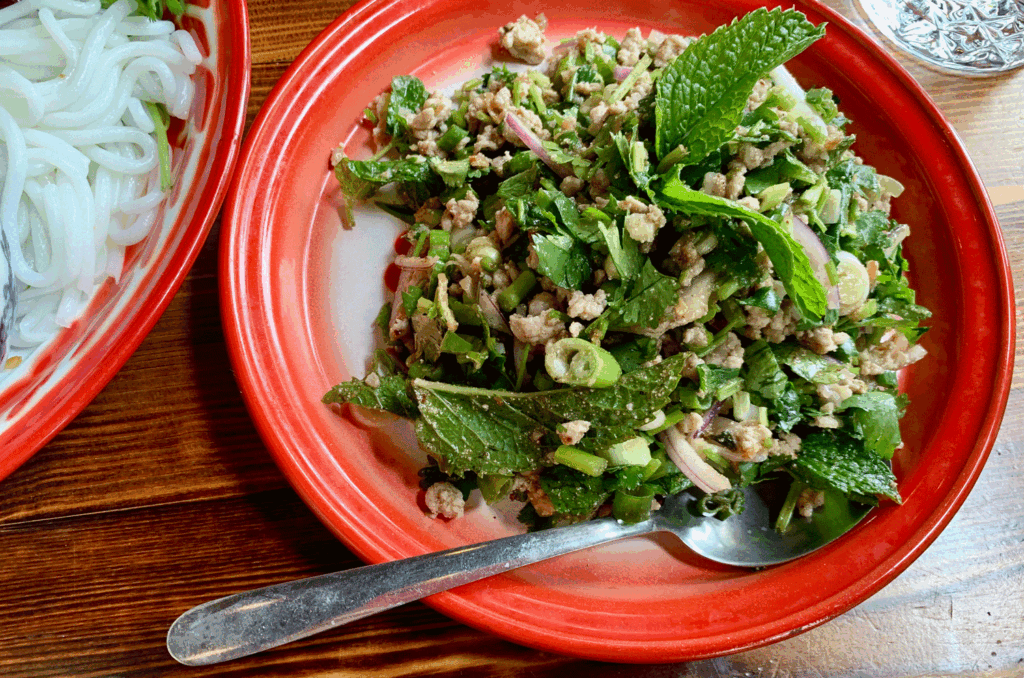
Serves 2–3
- 5 ounces ground chicken
- 1–2 garlic cloves, finely chopped
- 1 teaspoon MSG*
- 1 tablespoon lime juice
- 1 tablespoon toasted ground sticky rice*
- 5 mint leaves
- ½ cup chopped cilantro
- ½ cup sliced scallion
- ¼ cup thinly sliced red onion
- Chili flakes* to taste (or fresh Thai chili peppers, chopped)
- ¼ cup bottled fermented fish sauce, such as Pantai Fish Sauce
Add a little water to a saucepan; place on medium heat. Add the ground chicken and chopped garlic. Cook, stirring, until done. You want it to stay moist. Place cooked chicken in a bowl and let cool a bit. Add remaining ingredients and mix well. Serve at room temperature with sticky rice and lettuce or cabbage leaves and cucumber slices for scooping.
*Notes
MSG (monosodium glutamate) enhances umami flavor. It is generally recognized as safe and is not hard to find in local markets, but mushroom powder would be a good substitute.
Toasted ground rice adds crunchiness: To make it, toast sticky rice grains over low heat until golden brown, then grind.
If using dried chilis, toast them and then pound into flakes.