Slow-Fermented Cinnamon Rolls with Cream Cheese Frosting
By Chivi Marincola, Café Manager at the Good Table | Photos by Clara Rice
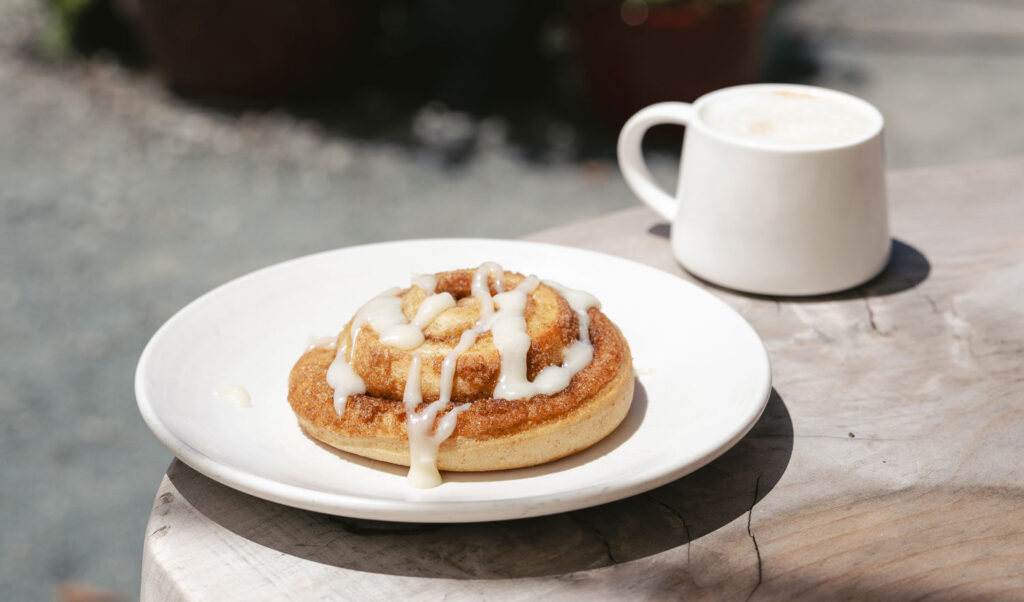
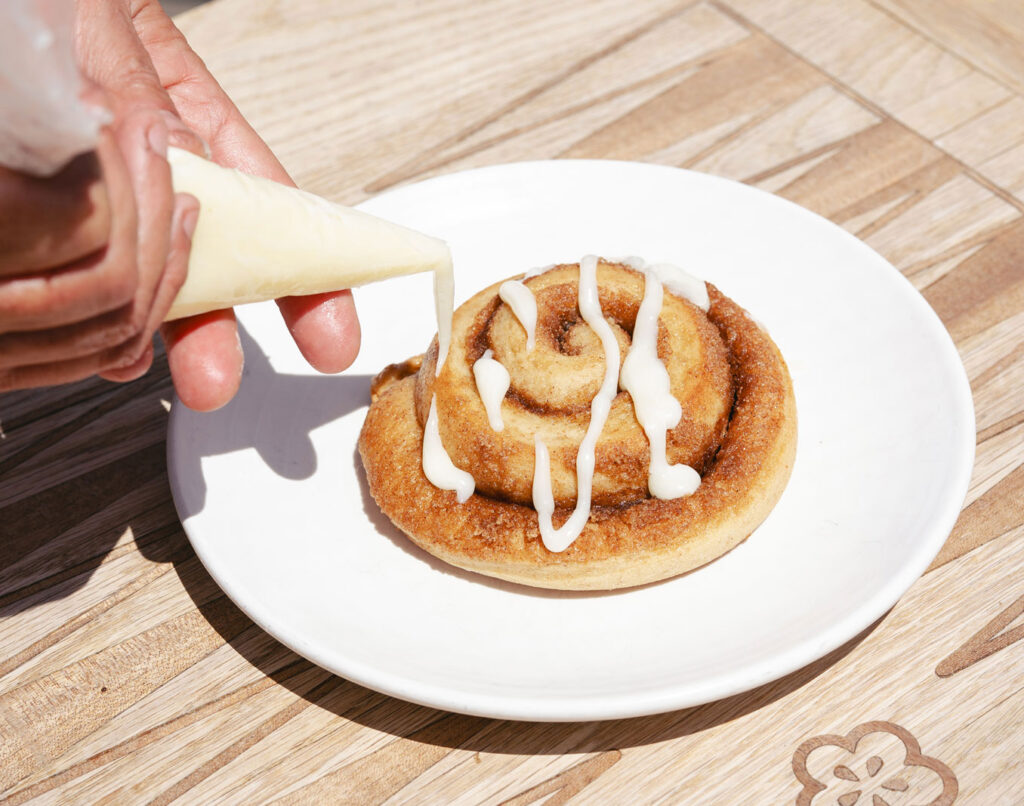 There is something magical about a cinnamon roll that has been given time. An overnight fermentation allows the flour to fully hydrate while the dough develops deep, complex flavors that simply can’t be achieved with a quick-rise. The addition of a small amount of sourdough levain adds subtle tanginess and incredible tenderness without making the rolls taste sour. The result is a light, fluffy crumb with rich cinnamon filling and a luscious cream cheese frosting that melts into every swirl.
Makes 12 generous cinnamon rolls
For the sponge
- 4 cups all-purpose flour
- ¾ cup whole wheat flour
- ½ cup packed golden brown sugar
- 2 teaspoons instant yeast
- ¼ cup active sourdough levain (starter)
- 2 cups warm milk (95°F)
- ½ cup vegetable oil
For finishing the dough
- ⅓ cup all-purpose flour
- ½ teaspoon baking powder
- ½ teaspoon baking soda
- 1½ teaspoons salt
For the cinnamon filling
- 1½ cups packed brown sugar
- 2 tablespoons ground cinnamon
- 3 tablespoons softened butter
For the cream cheese frosting
- 8 ounces (1 block) cream cheese, softened
- ¼ cup unsalted butter, softened
- 2 cups powdered sugar
- 1 teaspoon vanilla extract
- Generous pinch of salt
In a large mixing bowl, combine the all-purpose flour, whole wheat flour, brown sugar, instant yeast, and active levain.
Heat the milk until it feels comfortably warm to the touch. If the milk is too hot, it can weaken the yeast and damage the natural microorganisms in the levain.
Pour the warm milk and vegetable oil into the dry ingredients and mix until no dry flour remains. The dough will look shaggy and sticky at this stage, which is exactly what you want.
Knead for 6–8 minutes using a stand mixer with a dough hook or about 10 minutes by hand until the dough becomes smooth and elastic. It should feel soft and supple with only slight stickiness.
To finish the dough: Sprinkle the remaining flour, baking powder, baking soda, and salt evenly over the dough. The baking powder and baking soda provide an extra boost during proofing and baking, ensuring the finished rolls are exceptionally light while balancing the acidity from the levain.
Knead again for 3–5 minutes until everything is fully incorporated and the dough feels smooth, elastic, and slightly tacky. If the dough feels overly sticky, dust with a small amount of flour, but avoid adding too much. A slightly soft dough produces softer cinnamon rolls.
Cover the bowl tightly and refrigerate for 12–18 hours. The sponge is the foundation of the dough. Combining the flour, milk, yeast, and levain the night before allows the dough to slowly ferment while developing strength and flavor. During this slow fermentation, the dough matures gradually. The starches begin breaking down into sugars, gluten continues to strengthen, and the levain contributes subtle complexity without overwhelming acidity.
To Make the filling: Mix together the brown sugar and cinnamon until thoroughly combined.
To Roll and Fill: Lightly flour your work surface. Using a rolling pin, roll the dough into a rectangle approximately 16 × 9 inches. Try to maintain an even thickness throughout so the rolls bake uniformly.
Spread the softened butter across the dough surface, leaving about a ½-inch border along one long edge. The butter acts as the glue that helps the cinnamon sugar adhere to every layer.
Sprinkle the filling mixture evenly across the buttered dough, gently pressing it into the butter with your hands or the back of a spoon. This helps prevent the filling from falling out during slicing.
Beginning with the long side closest to you, roll the dough tightly into a log. Keep gentle tension as you roll but avoid stretching the dough. Once the dough is rolled, pinch the seam closed.
Slice the Rolls: For clean, bakery-style spirals, use a very sharp knife. This slices the dough without compressing it. Divide the log into 12 equal rolls. Arrange them in a parchment-lined baking dish or sheet pan, leaving about two inches between each roll to allow for expansion.
For the Final Rise: Cover the pan loosely with a clean kitchen towel. Allow the rolls to rise at room temperature for 2–3 hours. The exact timing depends on the temperature of your kitchen. Instead of watching the clock, watch the dough. The rolls are ready when 1) they have noticeably increased in size, 2) they are soft and puffy, 3) the edges are just beginning to touch, and 4) a gentle poke leaves an indentation that slowly springs back. Avoid over-proofing, as this can cause the rolls to collapse during baking.
To Bake: Preheat the oven to 350°F. Bake the rolls for 20–25 minutes, until their tops are a light golden-brown. An instant-read thermometer inserted into the center should register approximately 190°F.
Over-baking is one of the quickest ways to dry out cinnamon rolls, so begin checking them around the 20-minute mark.
Allow the rolls to cool for about 10 minutes before frosting. This allows the frosting to soften and melt into the swirls without completely running off.
To make the Frosting: While the rolls are cooling, beat the softened cream cheese and butter until completely smooth and fluffy. Gradually add the powdered sugar, mixing on low speed until incorporated before increasing the speed. Add the vanilla extract and a generous pinch of salt. Continue beating until silky smooth and spreadable. The salt balances the sweetness while the cream cheese provides a pleasant tang that complements the cinnamon filling beautifully. Spread generously over the warm rolls, allowing the frosting to melt into every layer.
Starter Maintenance
A healthy sourdough starter is the secret ingredient that gives these cinnamon rolls remarkable flavor and texture. If you bake only occasionally, store your starter in the refrigerator. Once each week, remove the starter from the refrigerator and discard approximately half. Feed the remainder equal parts flour and water by weight and mix thoroughly until smooth. Leave it at room temperature for several hours until bubbly and active and then return it to the refrigerator.
Before baking, remove the starter 4–8 hours ahead of time, feed it, and allow it to become fully active. A mature starter should double in volume and appear airy, with a pleasantly sweet, mildly tangy aroma.
Taking proper care of your starter rewards every bake with improved flavor, better fermentation, and exceptionally tender cinnamon rolls that stay soft long after they leave the oven.
Chivi Marincola describes herself as a multinational chef and baker who works at the intersection of farming, food systems, health and social causes. “I’M putting my entire background to service at the Good Table Café,” she says.