Editor’s Mixing Bowl
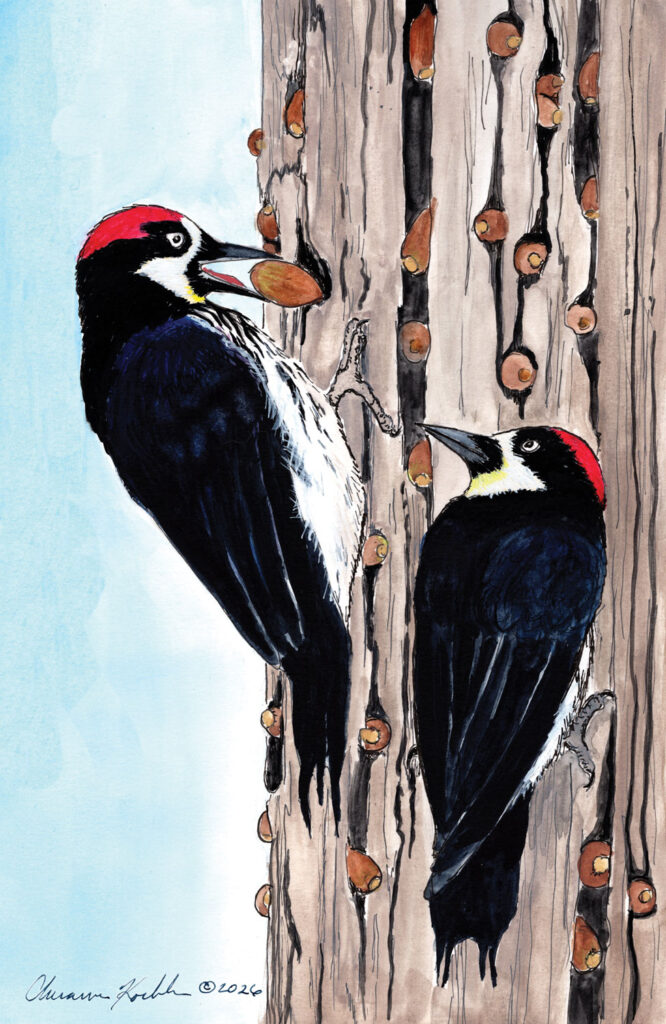 I ALWAYS THOUGHT BIRD WATCHING WAS FOR OTHER PEOPLE, but that was due to a fundamental misunderstanding about the point of it. I had thought the hobby required learning to identify countless species—along with their calls and habits—and keeping notebooks of sightings, but in fact, bird watching is unique to the bird-watcher, and my style seems to involve obsessing on one species at a time.
First came a crush on the Steller’s jay, a cocky bird with handsome black and blue feathers. Then it was the crow, or rather, the local murder of crows that sometimes follows me on neighborhood walks. In June, my allegiance shifted firmly to a punk rocker of a pileated woodpecker who was banging his head on a metal sculpture stationed next to the garden where I was weeding.
But in truth, I had been onto woodpeckers for a while. It started on a fall walk in the Butte County oak woodlands, where we spotted an acorn woodpecker tightly stuffing acorns into the vertical cracks on a wooden utility pole. It’s how this bird stores food for the winter.
Most 21st-century humans no longer give priority to storing food, nor routinely do we cure, ferment, or otherwise preserve foods to the extent that our ancestors did. We just go to the store. However, old cultural traditions still tug at us during the late-summer harvest, and many stories and recipes in this issue attest to that.
Apples, for instance, are a quintessential fall storage fruit. In her story on rare heritage apples, contributor Supriya Pandit introduces her neighbor Sharon Zo, who discusses the important role of rare fruit growers in preserving biodiversity on the planet. These old varieties offer exceptional flavors.
Cookbook author Anna Voloshyna makes food preservation magnificently vivid in her story on her upbringing in Ukraine, where the traditional cooking and food preservation practices she learned at home formed important rituals as well as tastes she recreates each fall in her Oakland kitchen.
In her In Season column, master preserver Barbara Kobsar describes how she cooks the season’s fresh shell beans, the same beans that might instead be dried for pantry storage. Her column pairs well with Rachel Trachten’s visit to Berkeley’s Three Stone Hearth (TSH), where we see how cooks in this community kitchen follow age-old techniques for preserving and serving those preserved foods. TSH worker-owner Mud Hut’s Three Sisters Vegan Chili recipe demonstrates how the TSH kitchen reconstitutes dried beans and corn using traditional Indigenous practices that unlock those foods’ inherent nutritional capacities.
Several stories and recipes in this issue touch on fermentation. Contributor Anna Mindess talks with chef-owner Kanlaya Palivan of Berkeley’s Lao Garden and learns how the Laotian version of fermented fish sauce gives her food its distinct taste. Photographer Clara Rice, who writes about three interlinked businesses in El Sobrante, asked The Good Table’s café manager Chivi Marincola for a recipe and received complete instructions for the chef’s slow-fermented cinnamon rolls. Such a treasure!
We also meet Summer Solace artisan-entrepreneur Megan Bre Camp, who handcrafts tallow skin care products. A former vegetarian, Camp joined up with the culinary nose-to-tail movement as she realized she could help rescue valuable byproducts from the regenerative meat industry to make her tallow. Through her retail shop, she champions similar sustainability work going on in the Fibershed movement.
We have lots more for you in this season of plenty, including two special restaurant roundups from contributors Meredith Pakier and Camille Morgenstern, so please don’t resist the urge to explore. Add to that our roundup of cool, soothing sweets (which we all need these days) from two dozen small East Bay ice cream makers.
Here’s to preserving the pleasures of the season’s harvest!
Cheryl Angelina Koehler
Editor